2024
Nomie: Where Personalized Travel Style Meets Financial Clarity
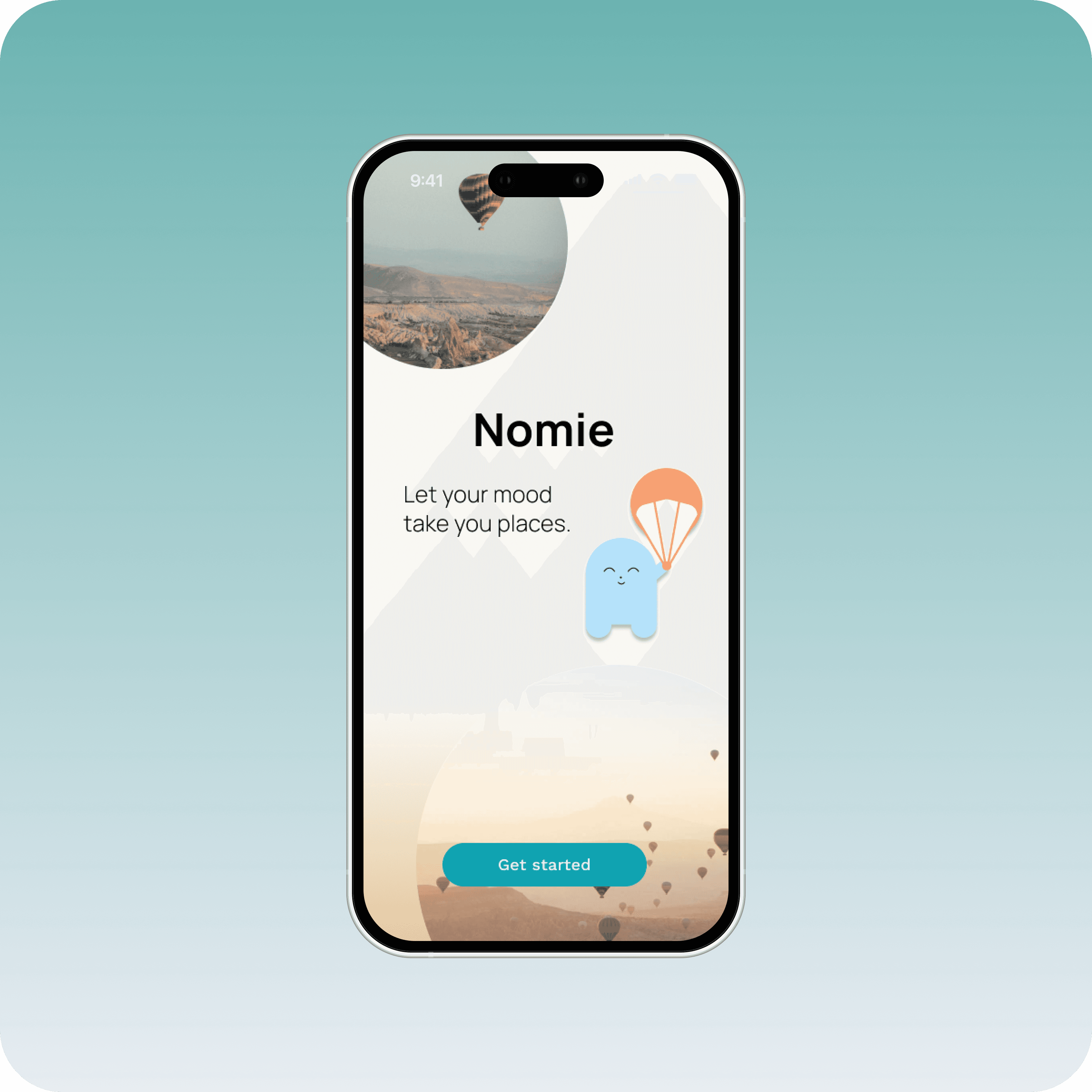
Nomie is an AI-powered budgeting tool that translates individual spending habits into personalized itineraries to help travelers plan actionable and stress-free trips.

Ireland Mak
Product Designer
My Role
As the sole UI/UX Designer for Nomie, I guided the product from early research through high-fidelity design, focusing on creating a calm, intuitive space for users managing multiple aspects of their daily well-being. I led user interviews, translated findings into clear design requirements, defined the information architecture, built the visual system, prototyped core interactions, and ran usability tests to ensure that each feature, from habit tracking to reflective journaling.
Challenges
As a travel enthusiast, I often find myself planning last-minute group trips with friends. While we always managed to pull the itinerary together, often adding activities on the go, the process was hectic and unorganized.
However, I’ve also noticed that, although we invest time and energy in planning, we often end up with disorganized itineraries, overlooked details, and choices that don’t always align with everyone’s preferences or budget.
Personalization Through Technology
Real-time data and mobile apps have made travel planning more efficient, giving users the ability to adjust plans and access updates on the go.
Online booking platforms allow travelers to compare prices, reviews, and options in one place, helping them make faster, more informed decisions.
Personalization features let users tailor their trips based on individual preferences and interests, creating more meaningful travel experiences.
*According to Travel & Tourism - Worldwide by Statista
Travel Style
Recognizing one’s travel style and setting realistic spending goals are key to effective trip planning.
Categorizing expenses ensures a more organized, budget-conscious experience aligned with individual preferences.
Travelers should strive to balance enjoyment with financial responsibility by aligning their budget with personal values and travel goals.
*According to Travel Like a Pro: Financial Planning for Every Type of Trip by Anis Suraya Mohamed
Research
Unpacking The Planning Struggle
Competitive Analysis
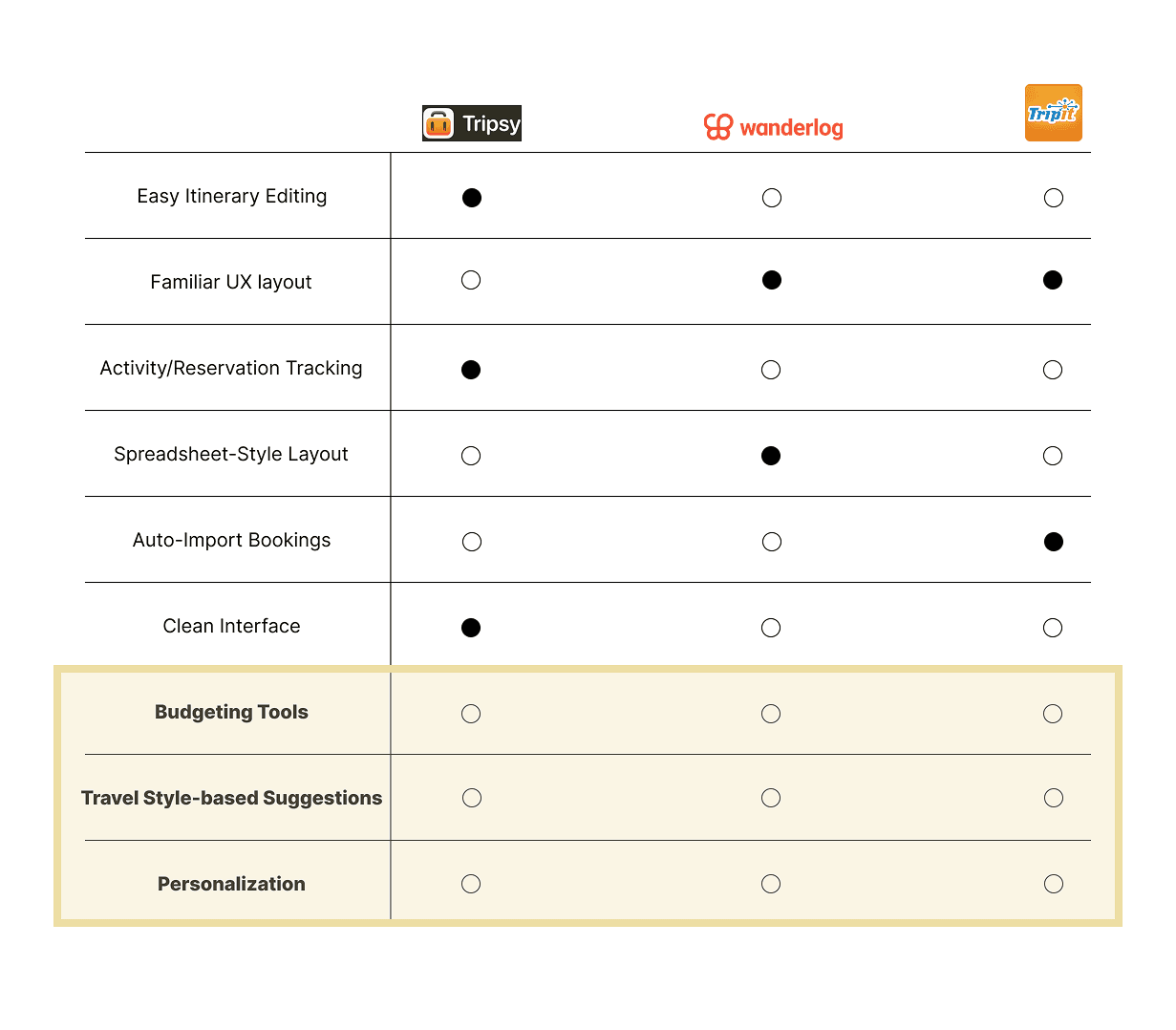
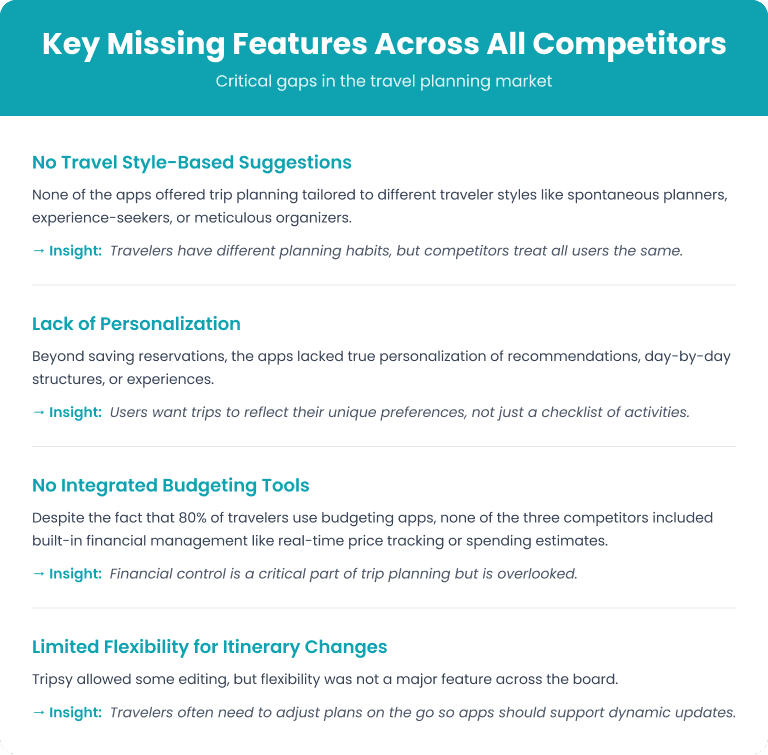
Key Missing Features Across All Competitors
Critical gaps in the travel planning market
No Travel Style-Based Suggestions
None of the apps offered trip planning tailored to different traveler styles like spontaneous planners, experience-seekers, or meticulous organizers.
→ Insight:
Travelers have different planning habits, but competitors treat all users the same.
Lack of Personalization
Beyond saving reservations, the apps lacked true personalization of recommendations, day-by-day structures, or experiences.
→ Insight:
Users want trips to reflect their unique preferences, not just a checklist of activities.
No Integrated Budgeting Tools
Despite the fact that 80% of travelers use budgeting apps, none of the three competitors included built-in financial management like real-time price tracking or spending estimates.
→ Insight:
Financial control is a critical part of trip planning but is overlooked.
Limited Flexibility for Itinerary Changes
Tripsy allowed some editing, but flexibility was not a major feature across the board.
→ Insight:
Travelers often need to adjust plans on the go so apps should support dynamic updates.
How This Shaped My Design Strategy
These gaps created a clear opportunity. Instead of building just another organizational tool, I focused my app on adaptive, user-centered travel planning. Specifically, I prioritized:
Travel Style Selection → Helping users plan based on how they prefer to experience trips.
Personalized, Editable Itineraries → Allowing drag-and-drop flexibility for all users.
Built-In Budgeting Features → Offering real-time price tracking and spending estimates from the start.
Quick, Intelligent Recommendations → Simplifying trip planning for users who feel overwhelmed by too many options.
By directly addressing what competitors missed, my app moves beyond logistics and helps users plan trips that feel personal, financially smart, and flexible. This brings real-world behaviors and needs into the core experience.
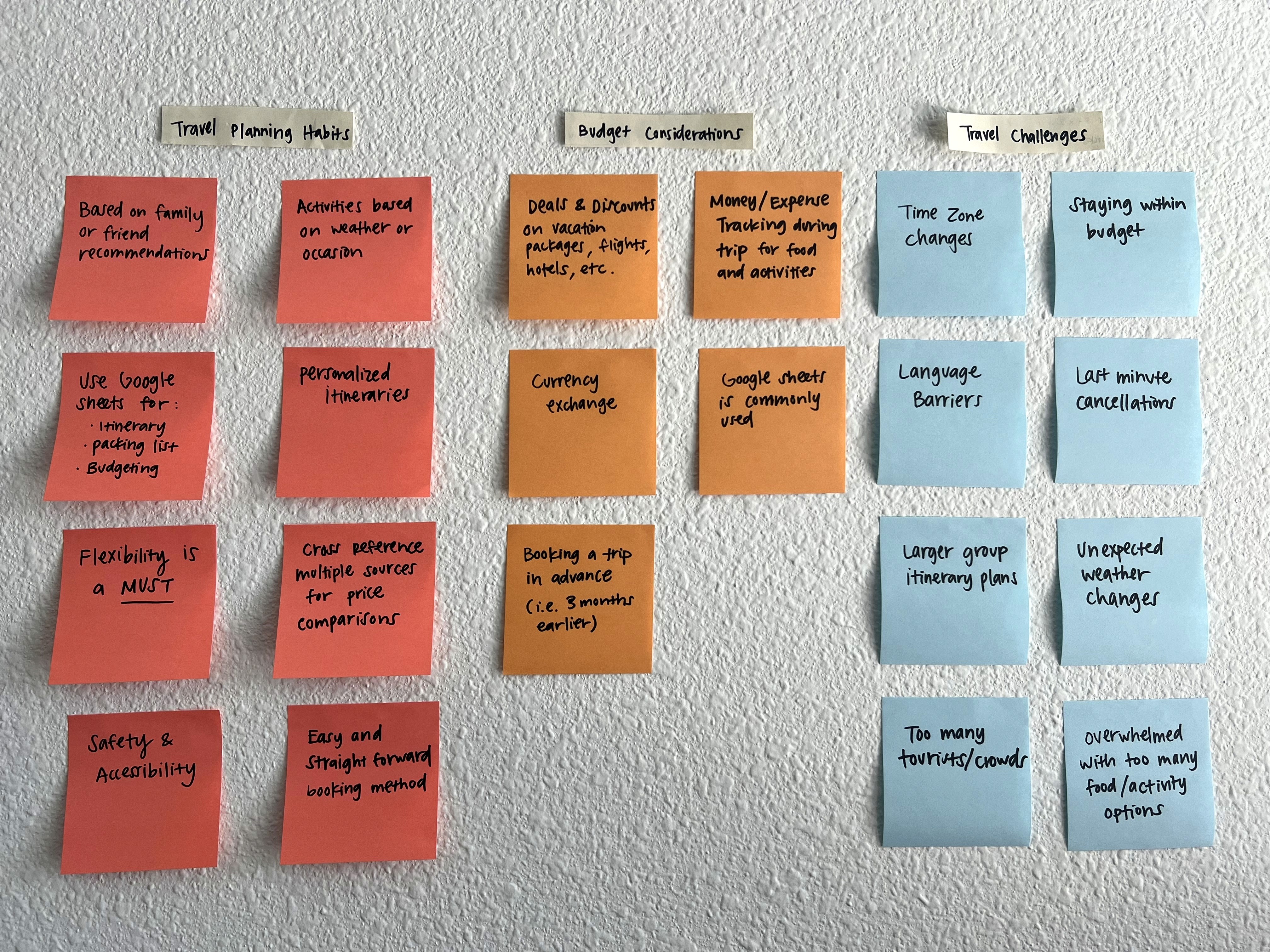
Affinity Map
User Interviews
As a travel enthusiast, I often find myself planning last-minute group trips with friends. While we always managed to pull the itinerary together by adding activities on the go, the process was hectic and unorganized.
However, I’ve also noticed that although we sacrifice time and energy to plan, we often end up with disorganized itineraries, overlooked details, and choices that don’t always align with everyone’s preferences or budget.
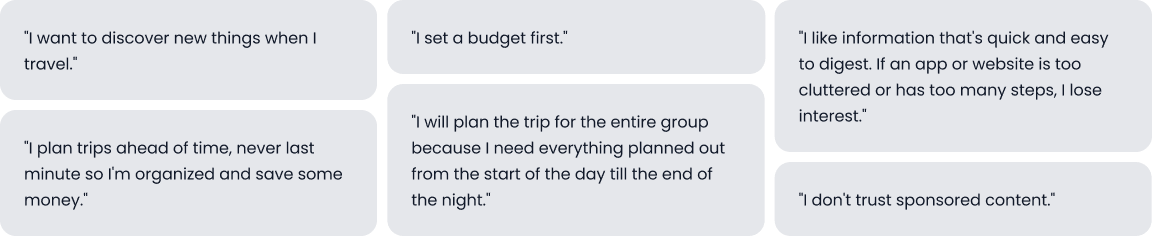
User Quotes
Main User Personas
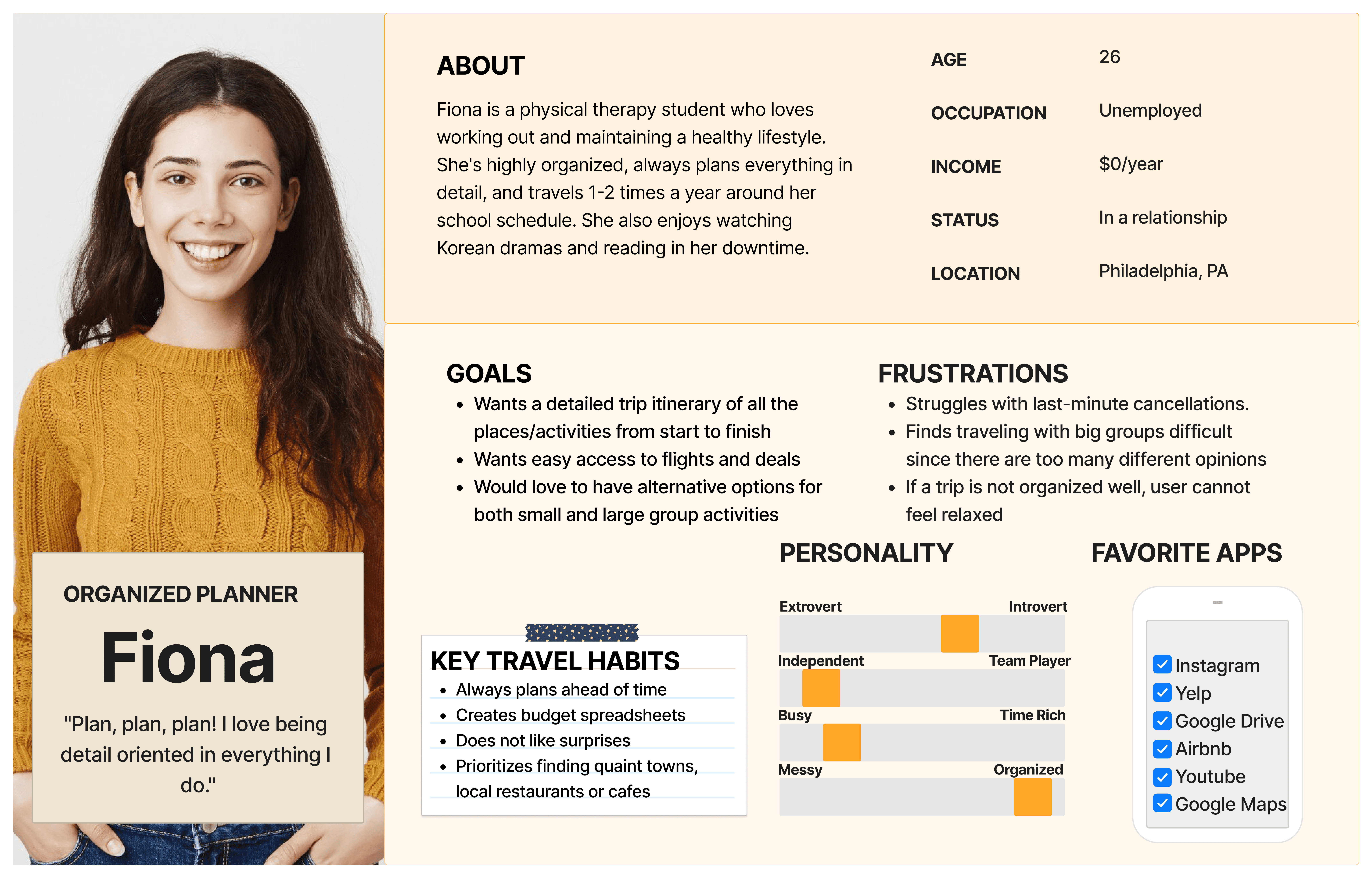
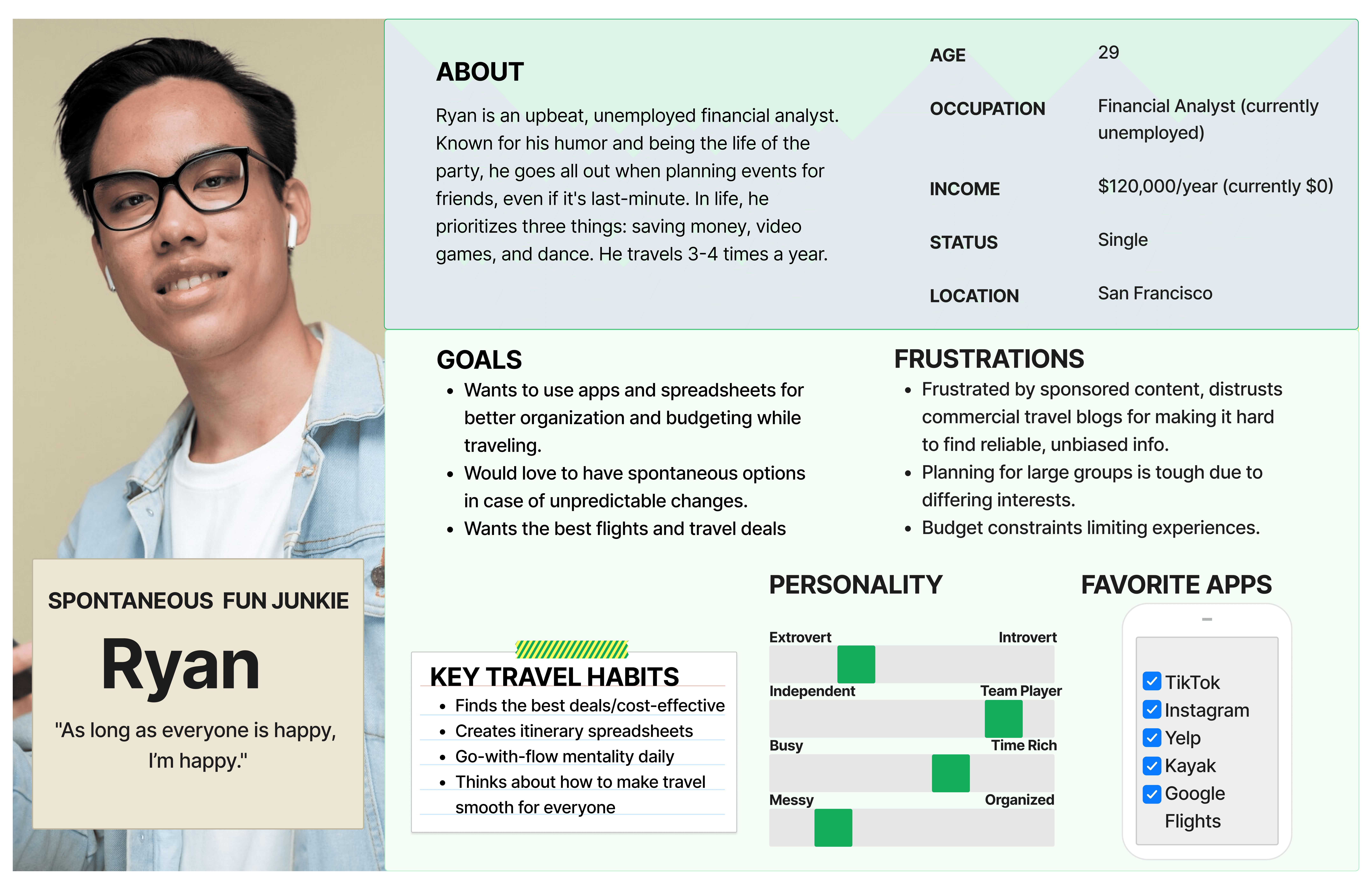
In the early stages, I interviewed several types of travelers: spontaneous explorers, deal-hunters, and experience seekers. I realized their struggles weren’t based on age or location alone. It was all about their travel style.
People like Ryan travel based on how they’re feeling, and they don’t want strict plans.
Others like Fiona thrive on details. She wants structure, tracking tools, and clarity.
Some users are somewhere in the middle who plan loosely but still want to feel in control.
HOW MIGHT WE…
Simplify the travel planning process to reduce decision fatigue while offering personalized, budget-friendly options that adapt to different travel styles, from spontaneous explorers to meticulous planners?
Early Ideation
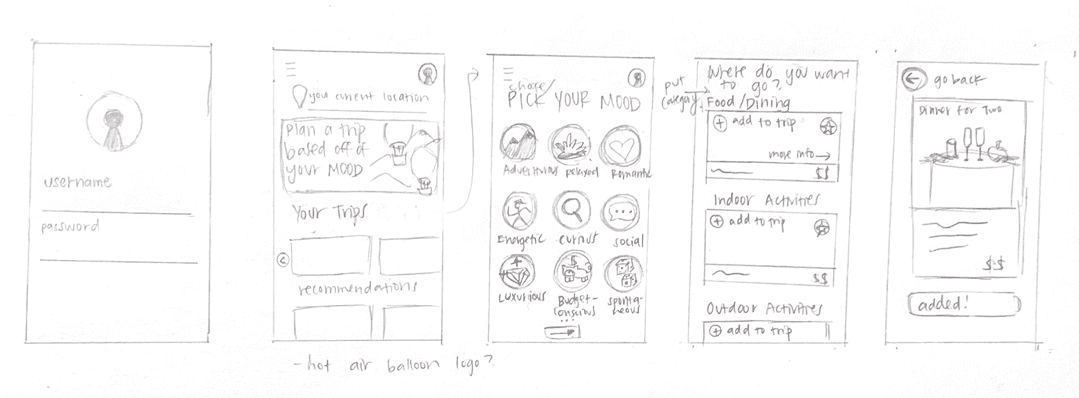
My first idea was a mood-based trip planner. The app would ask you how you're feeling and suggest a trip that matches that mood. It sounded playful and different, and users were intrigued at first.
But in testing, frequent comments included:
‘I don’t really know what “cozy” means in terms of activities.”
“I want to feel adventurous, but what if I just want a good meal?”
So the idea had charm, but it lacked clarity. Users couldn’t see how their mood would realistically guide a full trip plan. Ultimately, that disconnect led to my biggest pivot!
Sketch
User Flow
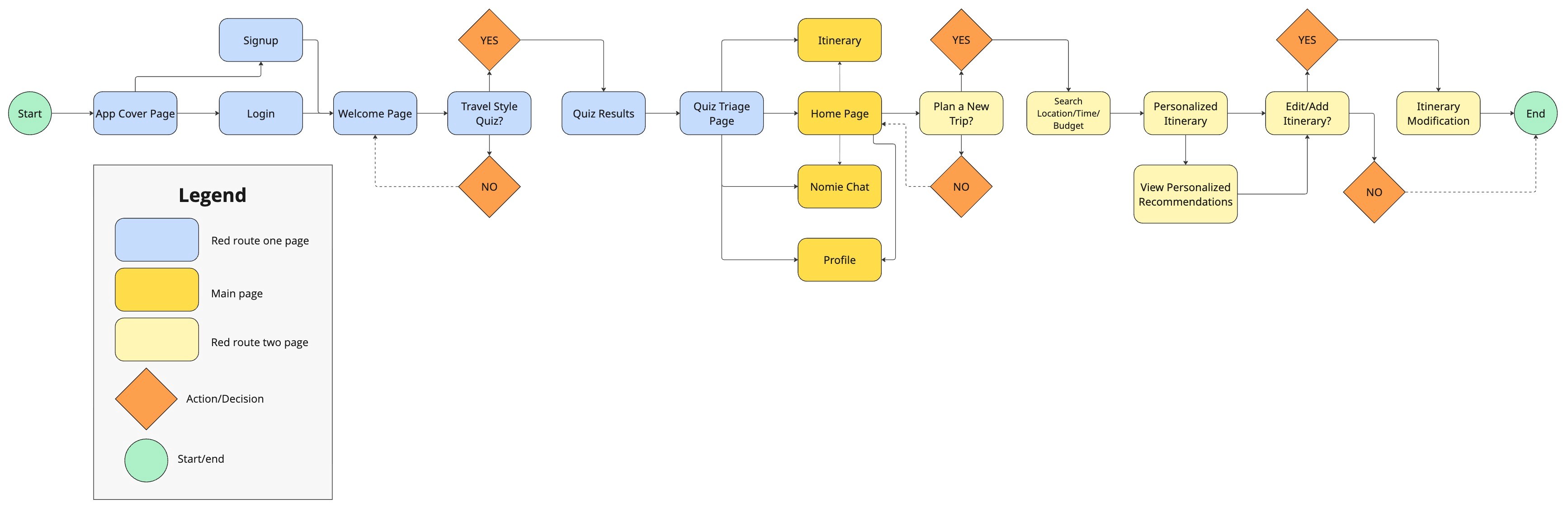
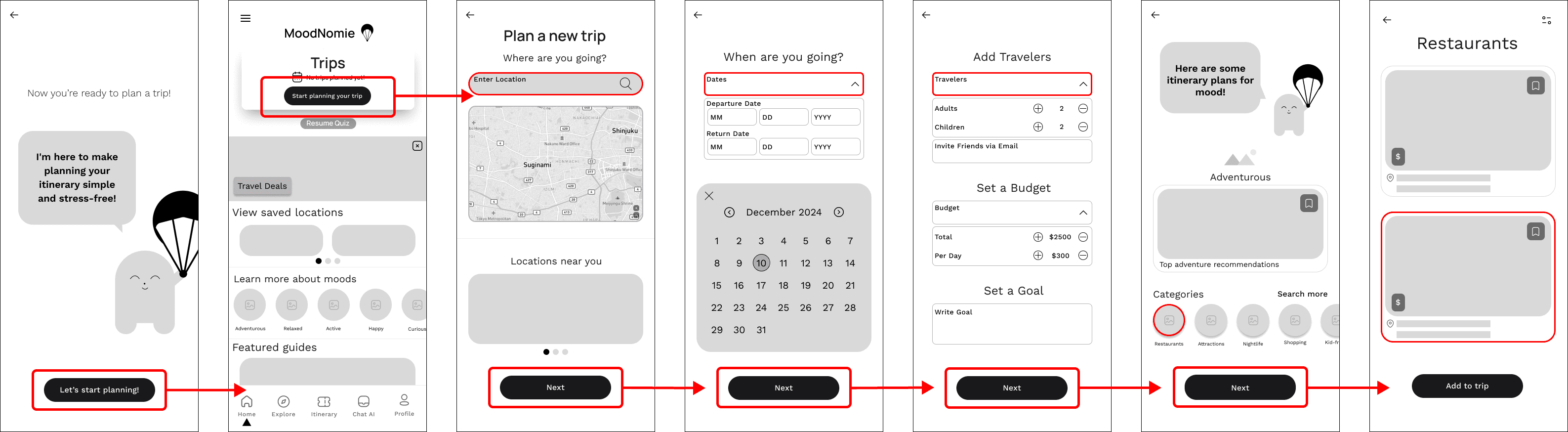
This user flow shows how the app guides travelers from the first tap to a fully personalized trip:
It starts with a simple entry point, the App Cover Page, where users can log in or sign up.
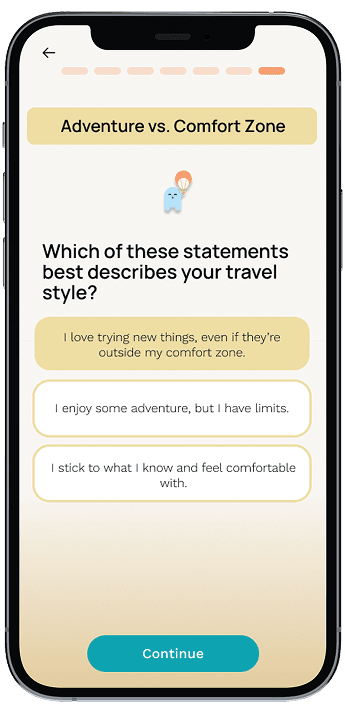
From there, they land on a Welcome Page and take a Travel Style Quiz that helps the app understand their preferences, like how they like to travel and what kind of budget they’re working with.
After getting their results, they’re brought to the Quiz Triage Page, which acts as a jumping-off point to explore different parts of the app.
From this hub, users can head to the Home Page where they can view their itinerary, chat with the Nomie assistant for help, or update their profile. They can make changes, add details, and then view tailored suggestions for places to stay, eat, and explore based on their quiz results and budget.
Wireframes
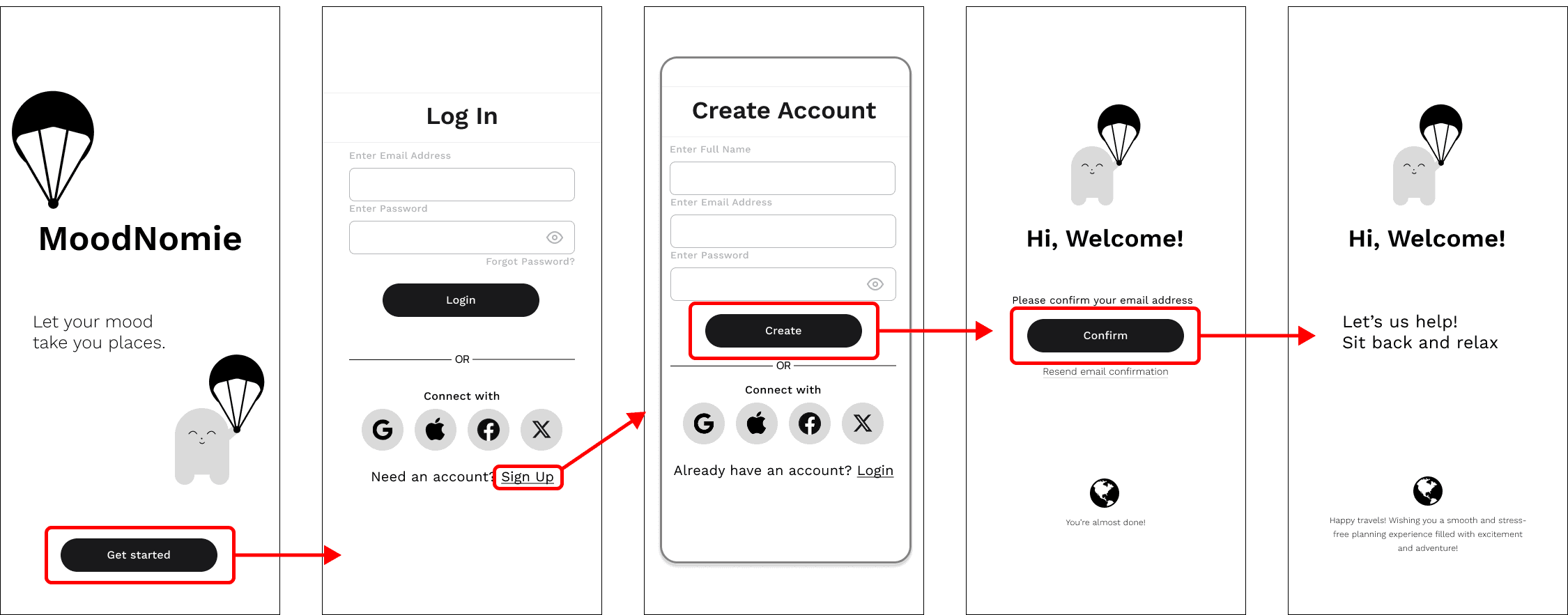
Red Route One - Create An Account
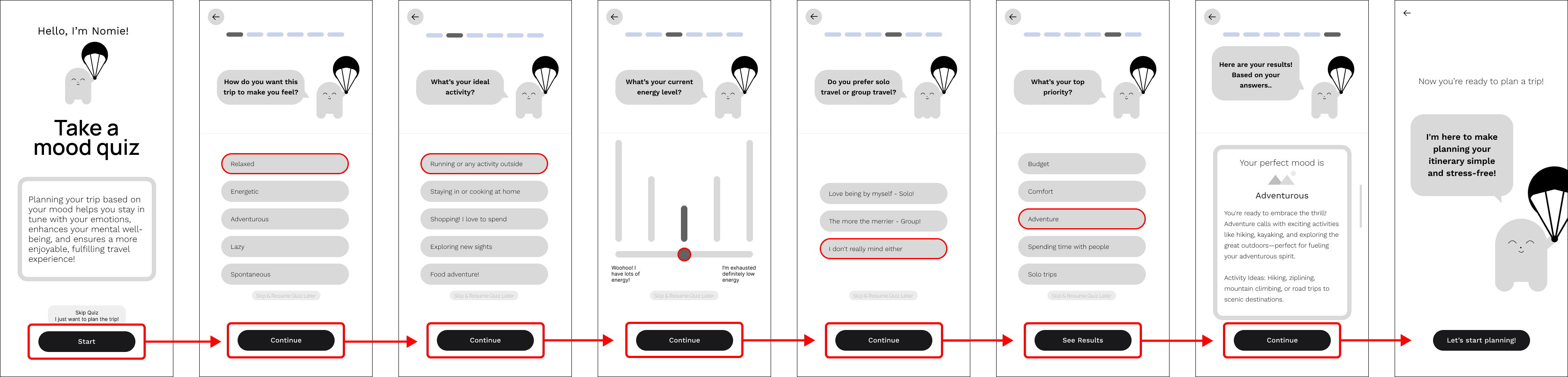
Red Route Two - Onboarding: Mood Quiz
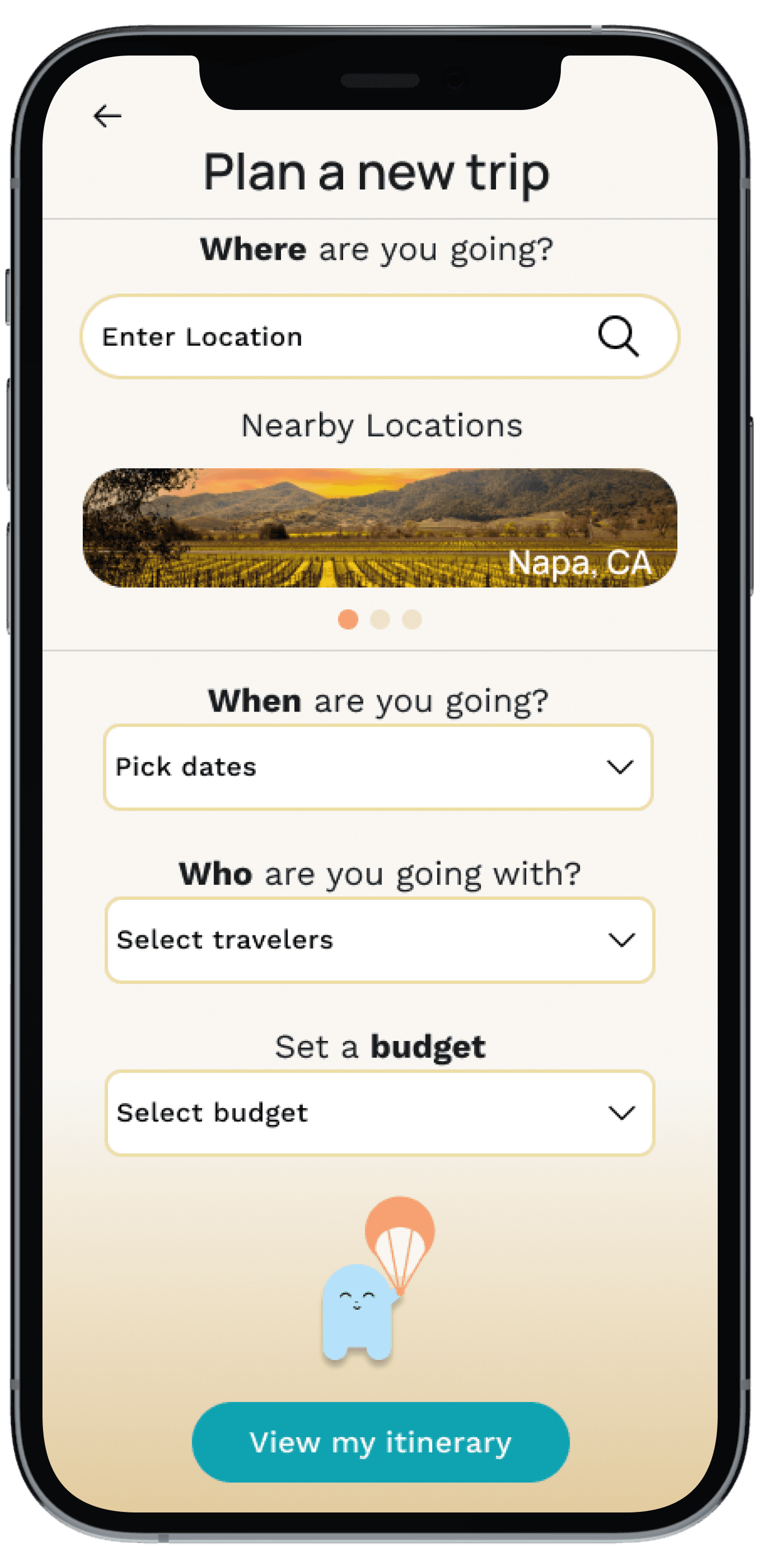
Red Route Three - Plan a Trip
User Pain Points
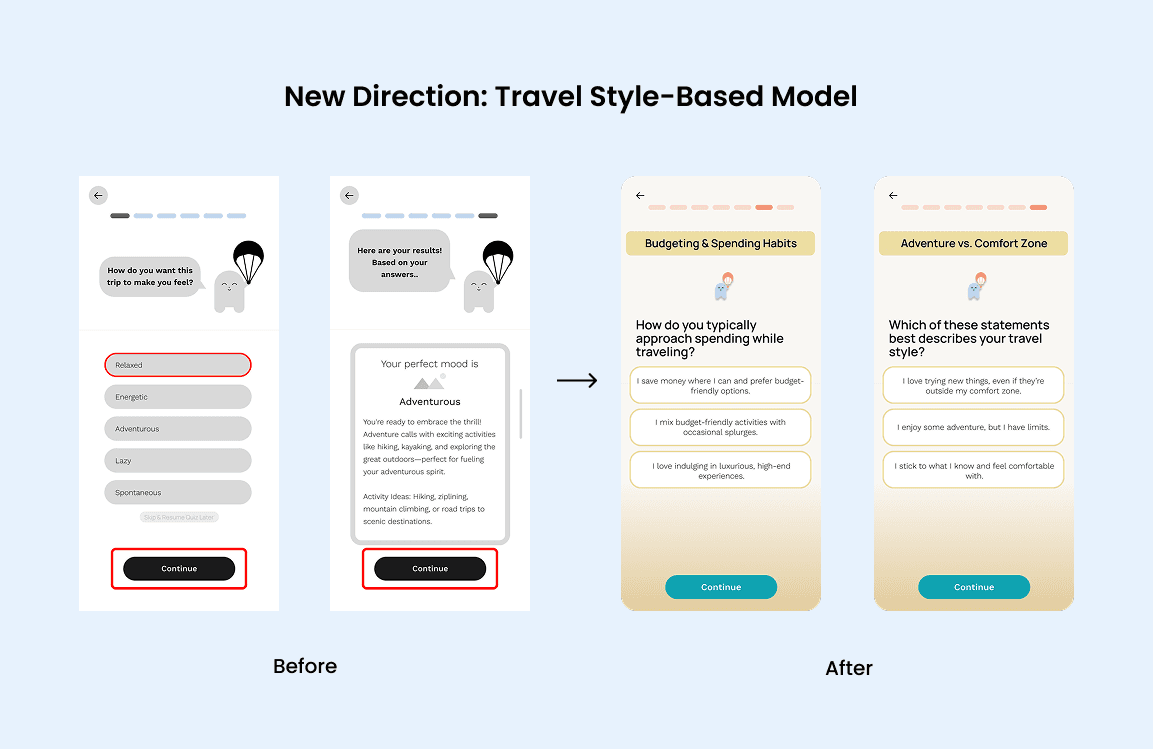
Shift from Mood-Based to Travel Style Planning
Original Concept
The initial idea for the app was centered around mood-based travel planning. Users would select a mood, such as adventurous, relaxed, or cultural, and receive a pre-generated itinerary tailored to that emotional state. The experience felt engaging and playful, and early sketches showcased a visually rich quiz flow leading to suggested activities, destinations, and themes. The aim was to reduce decision fatigue by offering emotionally driven recommendations with minimal user input.
Why It Changed
As secondary research deepened, a clear disconnect emerged between the emotional lens of mood and the practical needs of real travelers. 85% of users fell into budget-friendly or mid-range travel categories, with a clear focus on spending between $50–$200 per day. This revealed a key insight: users don’t typically plan trips around how they feel. Instead, they plan around how they spend.
How I Addressed User Pain Points
Drag-and-Drop Customization
Recognizing the diverse planning habits of different travelers, I introduced flexible itinerary-building tools.
Users can now drag, drop, and swap activities to suit their pace and preferences, catering especially to planners without overwhelming users.
Integrated Customization and Budgeting Tools
Added filters for preferred activities, dietary needs, and destination types, allowing users to select specific travel goals and group preferences.
To support the 80% of travelers who actively manage travel expenses, the app now features real-time price tracking, estimated daily spending, and toggles to adjust for splurge vs. save options. This aligned directly with user behavior, making planning not just fun, but financially grounded.
Solution
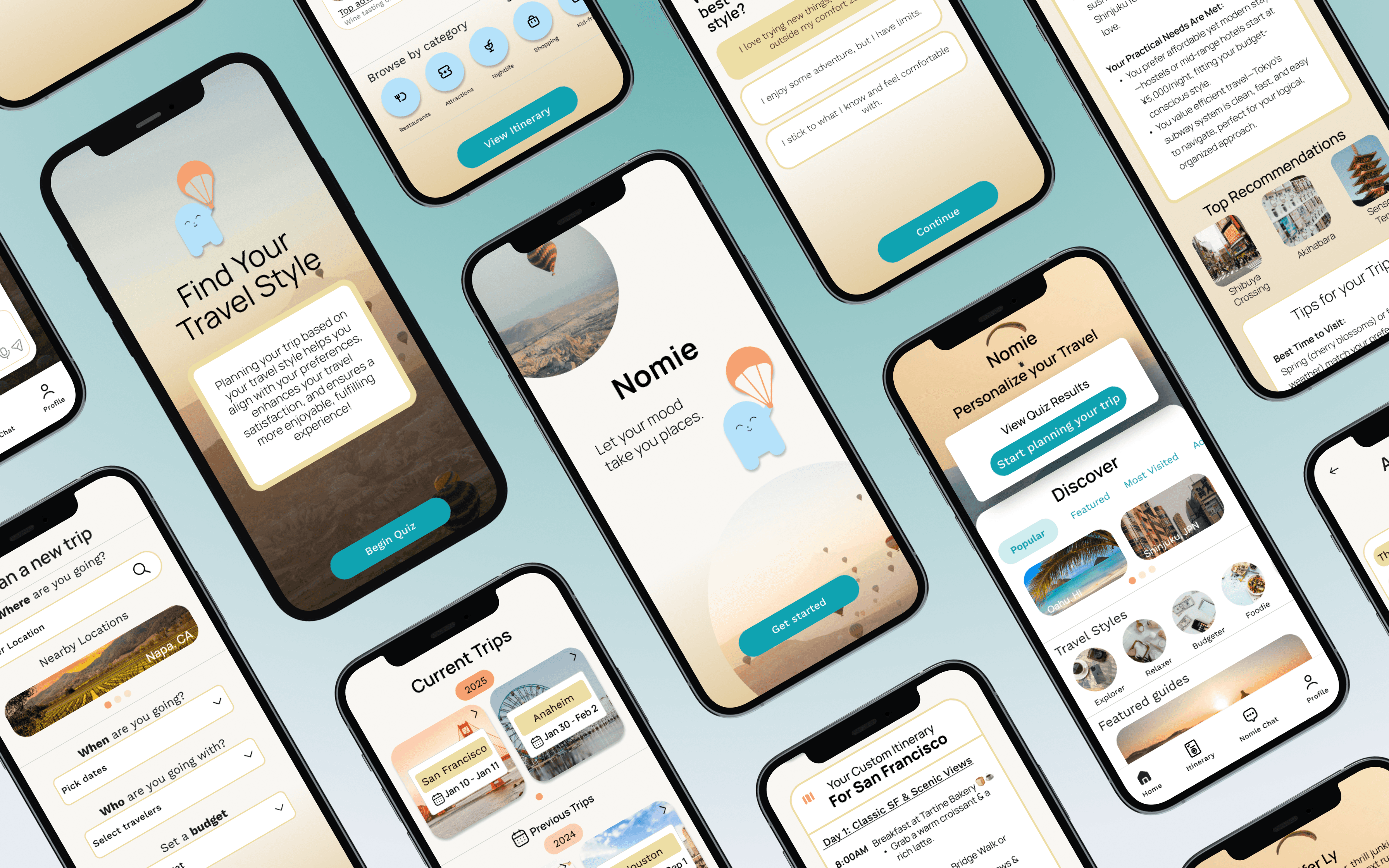
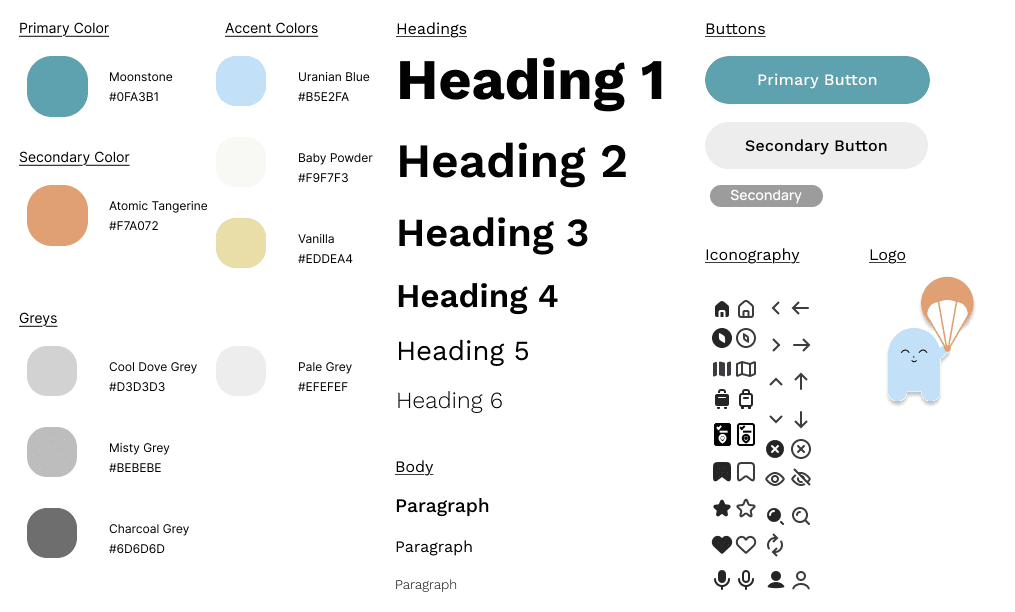
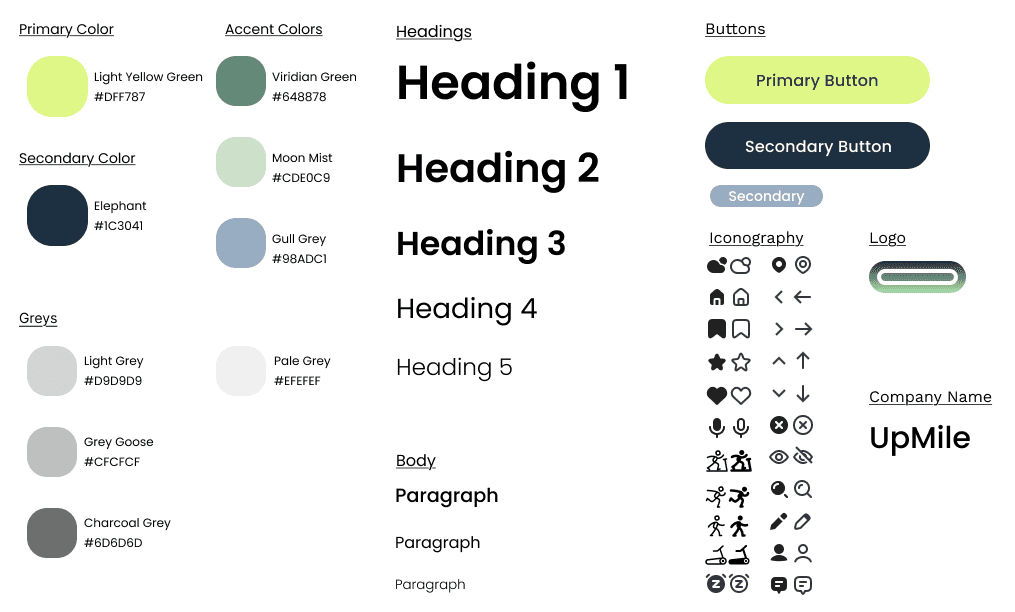
This is where the visual identity really came together. I used calming colors, lots of white space, and simple icons to reduce cognitive load. I introduced ‘Nomie,’ a friendly character that helps guide users.
Design System
This is where the visual identity really came together. I used calming colors, lots of white space, and simple icons to reduce cognitive load. I introduced ‘Nomie,’ a friendly character that helps guide users.
Test It Out!
Wrap-Up
More insights to explore
Discover additional case studies, tips, and strategies to help your business grow and innovate faster.

2025
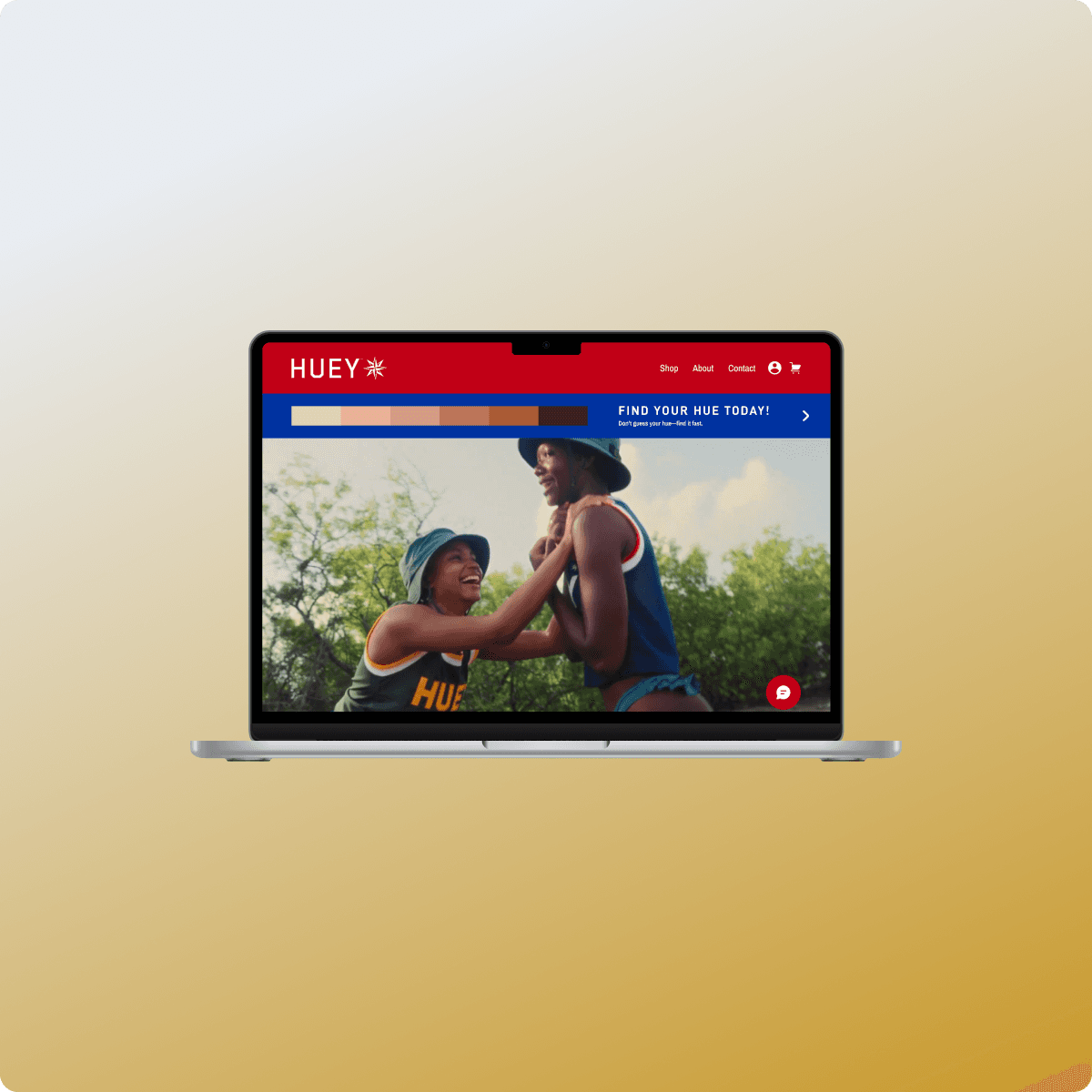
Huey Suncare: Redesigning the Suncare E-commerce Experience
A modernized e-commerce platform that integrates interactive quizzes and an AI-powered dermatology chat to improve accessibility for diverse skin needs.
2026
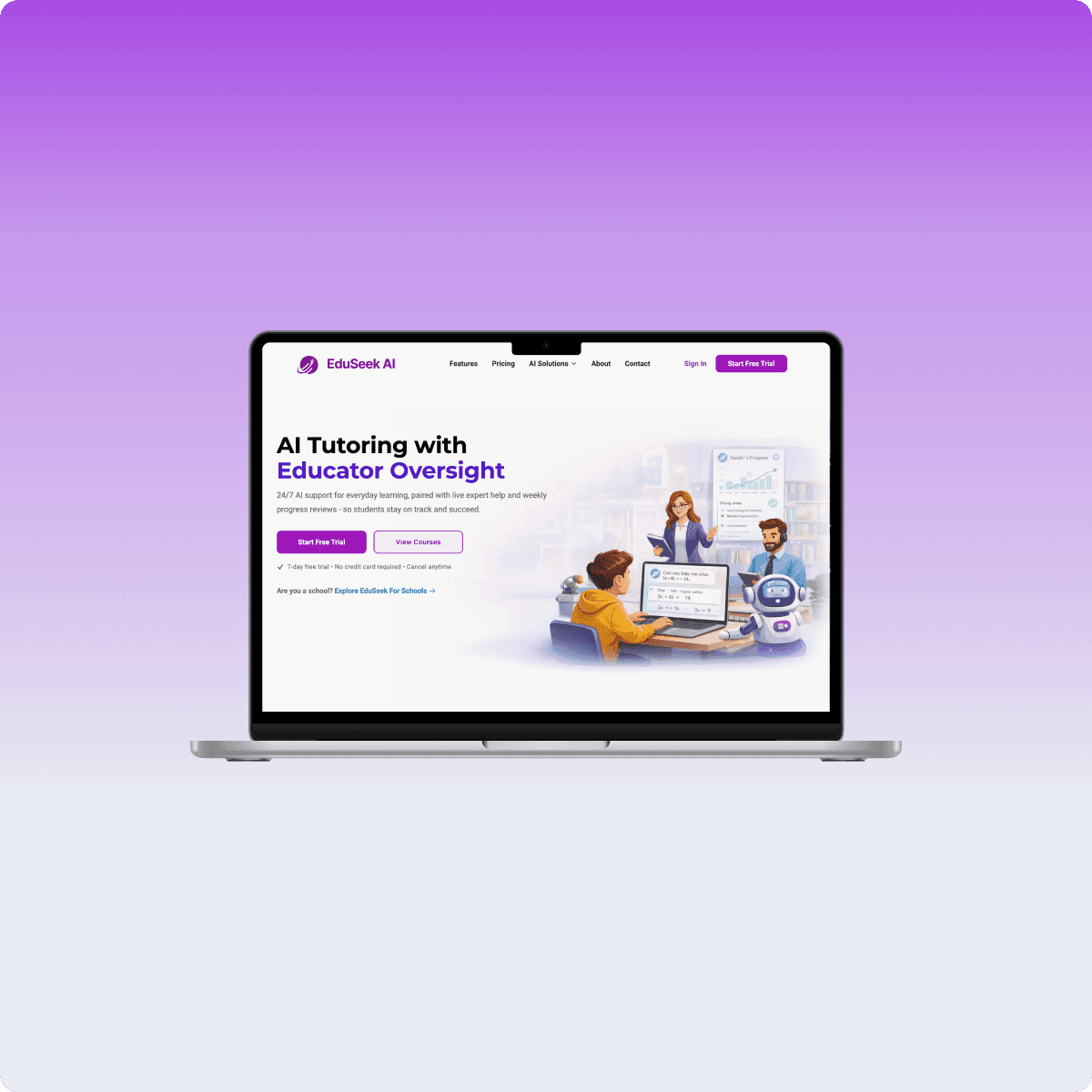
EduSeek AI: Bridging AI Guidance with Human Support in Learning
Design AI-powered learning experiences by simplifying workflows, improving cross-platform consistency, and creating scalable UI for students, parents, and tutors.
2024
2024
Nomie: Where Personalized Travel Style Meets Financial Clarity
Nomie is an AI-powered budgeting tool that translates individual spending habits into personalized itineraries to help travelers plan actionable and stress-free trips.
Ireland Mak
Product Designer
My Role
As the sole UI/UX Designer for Nomie, I guided the product from early research through high-fidelity design, focusing on creating a calm, intuitive space for users managing multiple aspects of their daily well-being. I led user interviews, translated findings into clear design requirements, defined the information architecture, built the visual system, prototyped core interactions, and ran usability tests to ensure that each feature, from habit tracking to reflective journaling.
Challenges
As a travel enthusiast, I often find myself planning last-minute group trips with friends. While we always managed to pull the itinerary together, often adding activities on the go, the process was hectic and unorganized.
However, I’ve also noticed that, although we invest time and energy in planning, we often end up with disorganized itineraries, overlooked details, and choices that don’t always align with everyone’s preferences or budget.
Challenges
As a travel enthusiast, I often find myself planning last-minute group trips with friends. While we always managed to pull the itinerary together, often adding activities on the go, the process was hectic and unorganized.
However, I’ve also noticed that, although we invest time and energy in planning, we often end up with disorganized itineraries, overlooked details, and choices that don’t always align with everyone’s preferences or budget.
Research
Competitive Analysis
To further inform my direction, I studied leading industry apps to identify what they do well and where they fall short. This helped me define a solution that maintains their strengths while addressing gaps in accessibility, motivation, and beginner support.
Design Strategy
What became clear through competitor analysis and testing was this: most apps assume users already run. They highlight stats, social feeds, and leaderboards. However, they miss the before, the uncertainty, the prep, and the questions no one wants to ask. That’s where most beginners hesitate and where I decided to focus.
What Sunscreens Aren't Saying
To further refine Huey’s direction, I analyzed competing sunscreen brands to uncover where they excel and where they fall short. This revealed an opportunity for Huey to stand apart through its nautical-inspired branding, clear communication, and focus on mineral sunscreen, while addressing gaps in personalization, education, and product fit.
Solutions
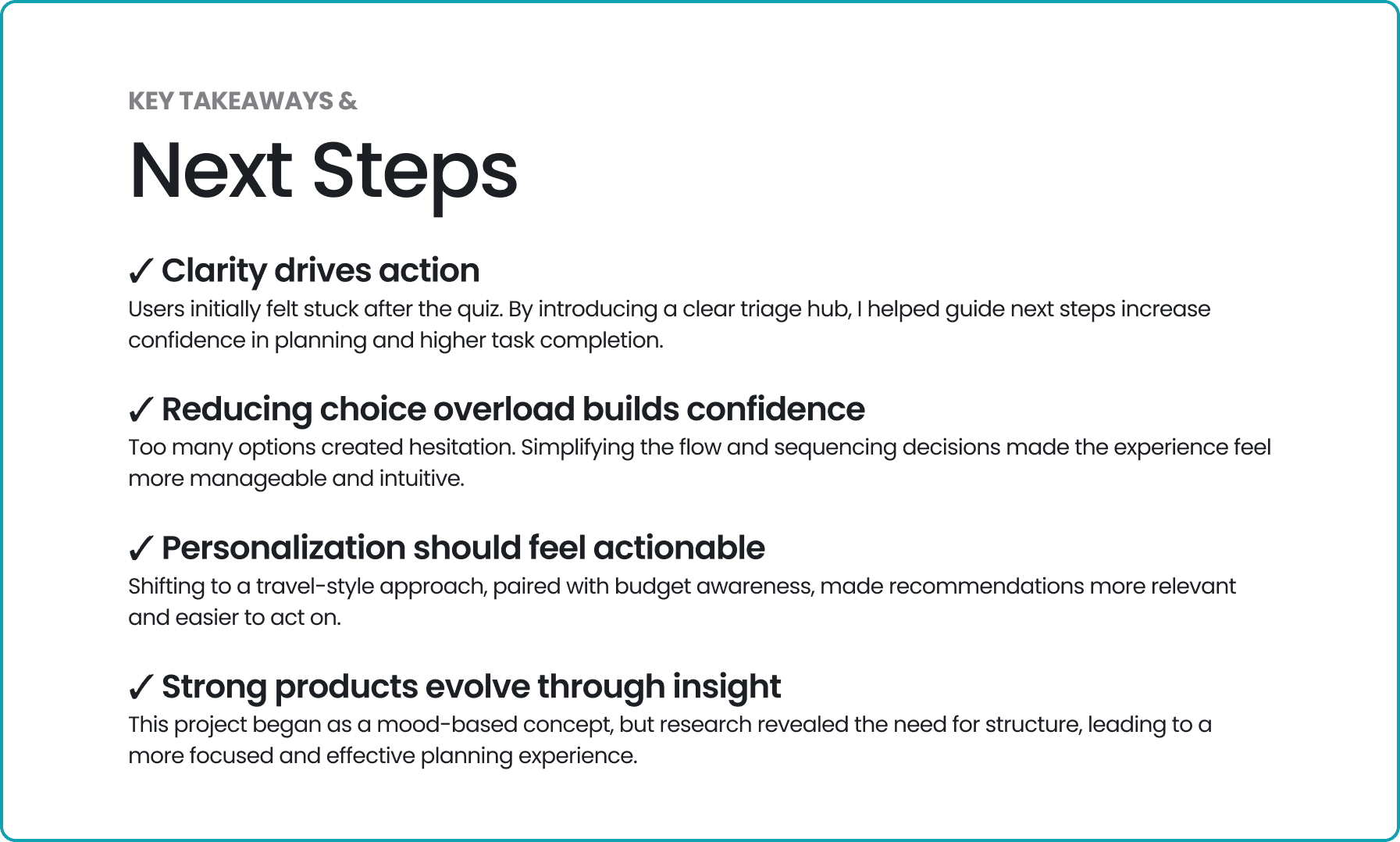
I kept final screens minimal but clear, because almost every user I interviewed said that too many options made them freeze or abandon the planning altogether. I also made sure trip results felt tailored to the user. This included categories that showed price ranges, transportation options, and clear sections for hotels, activities, and food to help the experience feel personalized and useful.
What Research Taught Us About Sun Care
By breaking my research into the competitive landscape, users, and goals, I was able to connect the bigger market picture with real user needs.
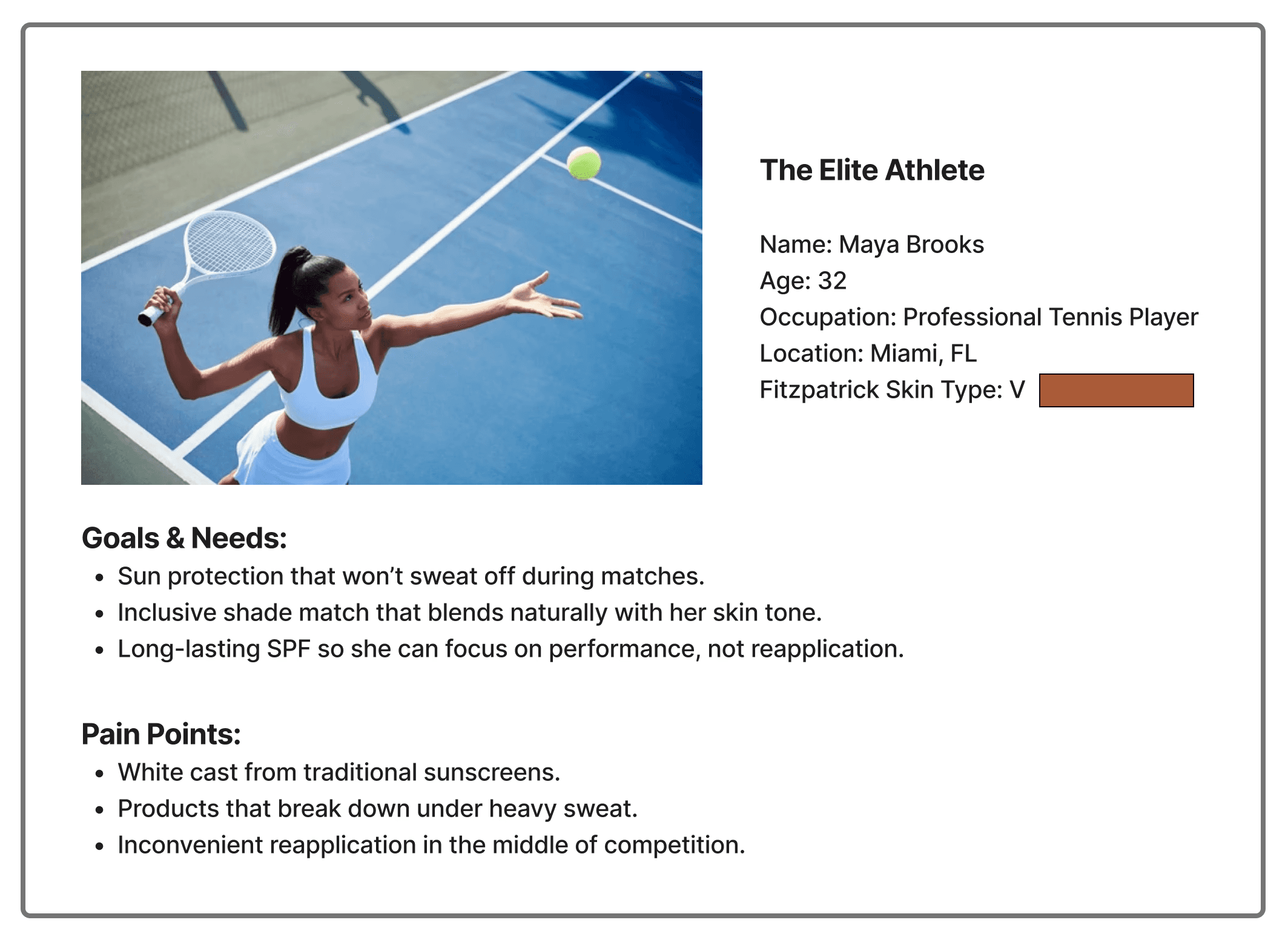
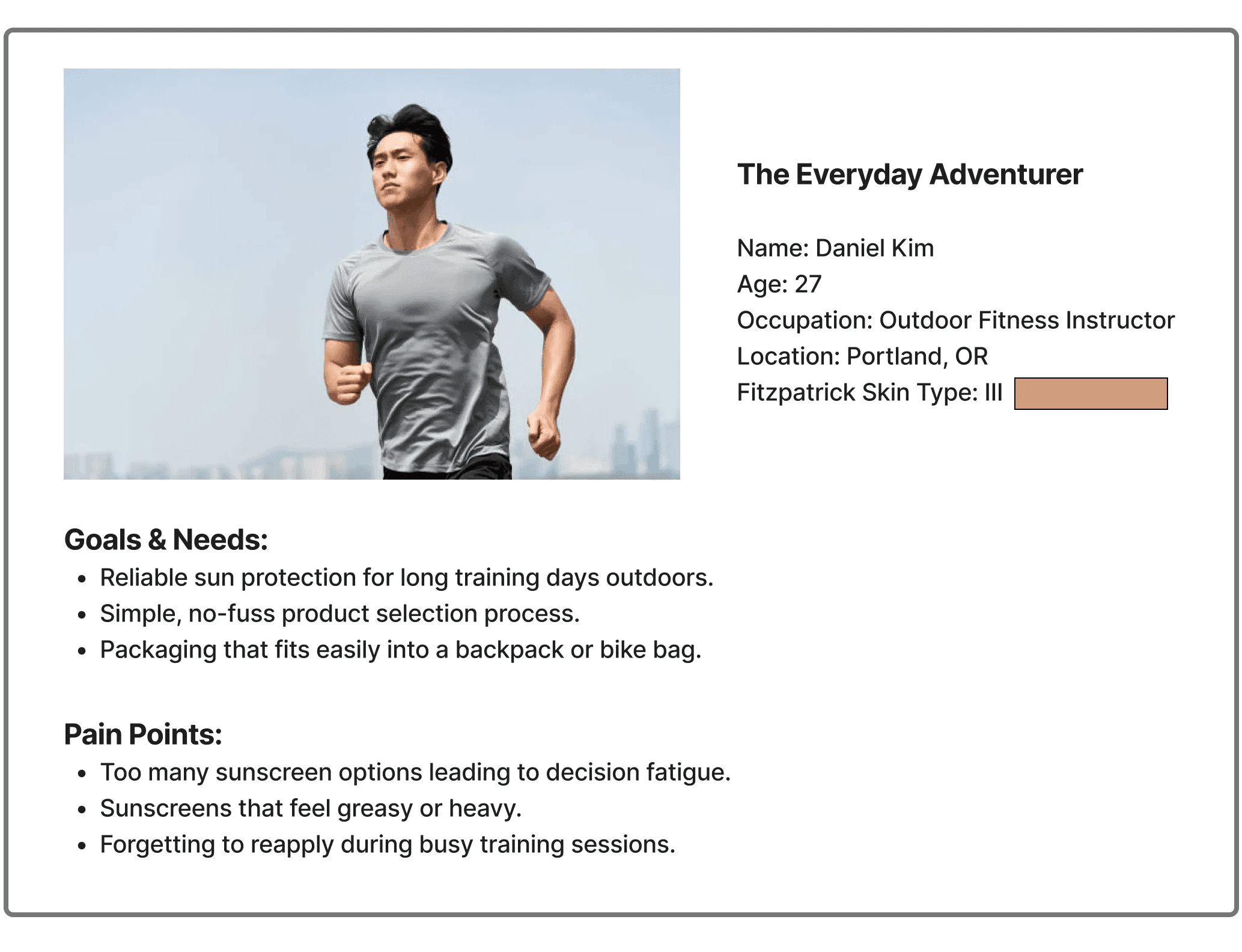
Meet The Users
Impact
The final designs delivered a polished, launch-ready MVP that positioned Hypebox as a modern and trustworthy platform for influencer-brand collaborations.
Design System
I chose a green color palette for the app because it naturally evokes feelings of growth, energy, and balance, which are qualities that align well with running and fitness.
Green is often associated with nature and the outdoors, which complements the app’s focus on both indoor and outdoor running options. From a psychological perspective, green promotes calmness and motivation without overwhelming the user, helping maintain focus during training.
*According to Cleveland Clinic Newsroom - Why Many Enjoy the Color Green
Test It Out!
Competitive Analysis
EduSeek AI bridges the gap between passive learning and real-time support through integrated live tutoring, AI guidance, and personalized learning in one space.
Instead of treating learning as a one-directional experience, it combines three things that are usually separate: live student support, AI tutoring, and personalized learning paths. So if a student gets stuck, they’re not forced to leave the platform or wait—they can immediately get help, either through AI or a real tutor.
Competitive Analysis
EduSeek AI bridges the gap between passive learning and real-time support through integrated live tutoring, AI guidance, and personalized learning in one space.
Instead of treating learning as a one-directional experience, it combines three things that are usually separate: live student support, AI tutoring, and personalized learning paths. So if a student gets stuck, they’re not forced to leave the platform or wait—they can immediately get help, either through AI or a real tutor.
Personalization Through Technology
Real-time data and mobile apps have made travel planning more efficient, giving users the ability to adjust plans and access updates on the go.
Online booking platforms allow travelers to compare prices, reviews, and options in one place, helping them make faster, more informed decisions.
Personalization features let users tailor their trips based on individual preferences and interests, creating more meaningful travel experiences.
*According to Travel & Tourism - Worldwide by Statista
Personalization Through Technology
Real-time data and mobile apps have made travel planning more efficient, giving users the ability to adjust plans and access updates on the go.
Online booking platforms allow travelers to compare prices, reviews, and options in one place, helping them make faster, more informed decisions.
Personalization features let users tailor their trips based on individual preferences and interests, creating more meaningful travel experiences.
*According to Travel & Tourism - Worldwide by Statista
Travel Style
Recognizing one’s travel style and setting realistic spending goals are key to effective trip planning.
Categorizing expenses ensures a more organized, budget-conscious experience aligned with individual preferences.
Travelers should strive to balance enjoyment with financial responsibility by aligning their budget with personal values and travel goals.
*According to Travel Like a Pro: Financial Planning for Every Type of Trip by Anis Suraya Mohamed
Travel Style
Recognizing one’s travel style and setting realistic spending goals are key to effective trip planning.
Categorizing expenses ensures a more organized, budget-conscious experience aligned with individual preferences.
Travelers should strive to balance enjoyment with financial responsibility by aligning their budget with personal values and travel goals.
*According to Travel Like a Pro: Financial Planning for Every Type of Trip by Anis Suraya Mohamed
Research
Unpacking The Planning Struggle
How This Shaped My Design Strategy
These gaps created a clear opportunity. Instead of building just another organizational tool, I focused my app on adaptive, user-centered travel planning. Specifically, I prioritized:
Travel Style Selection → Helping users plan based on how they prefer to experience trips.
Personalized, Editable Itineraries → Allowing drag-and-drop flexibility for all users.
Built-In Budgeting Features → Offering real-time price tracking and spending estimates from the start.
Quick, Intelligent Recommendations → Simplifying trip planning for users who feel overwhelmed by too many options.
By directly addressing what competitors missed, my app moves beyond logistics and helps users plan trips that feel personal, financially smart, and flexible. This brings real-world behaviors and needs into the core experience.
User Quote
What I appreciate about EduSeek AI is that it helps me meet students where they are. I can quickly see what they’re struggling with, so we can focus on building real understanding instead of just getting through problems. I’ve noticed my students feel more confident, which is always my goal as a teacher.
What I appreciate about EduSeek AI is that it helps me meet students where they are. I can quickly see what they’re struggling with, so we can focus on building real understanding instead of just getting through problems. I’ve noticed my students feel more confident, which is always my goal as a teacher.

Hatice Algebra I & II Tutor
User Personas
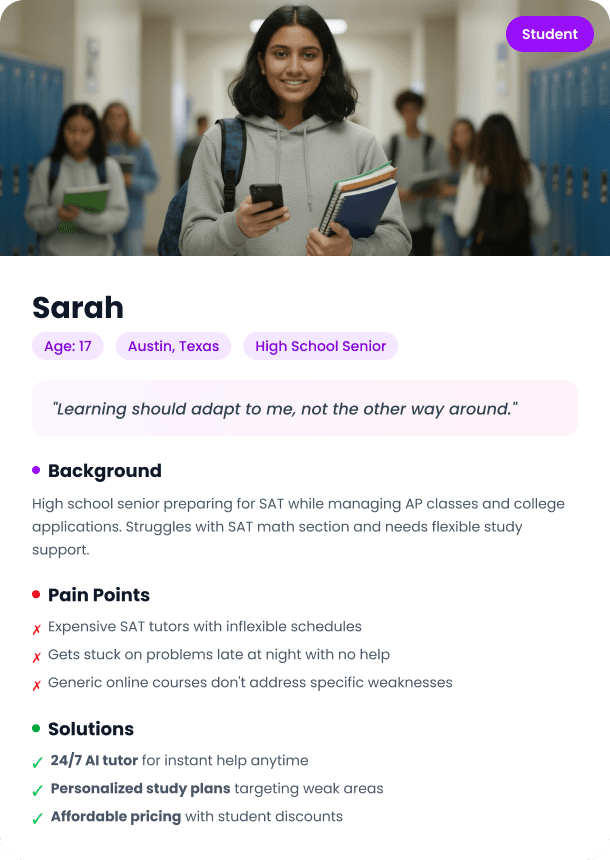
First is the student, someone balancing school, time, and often needing flexible, on-demand support. Their biggest challenge is getting help that’s actually personalized and available when they need it.
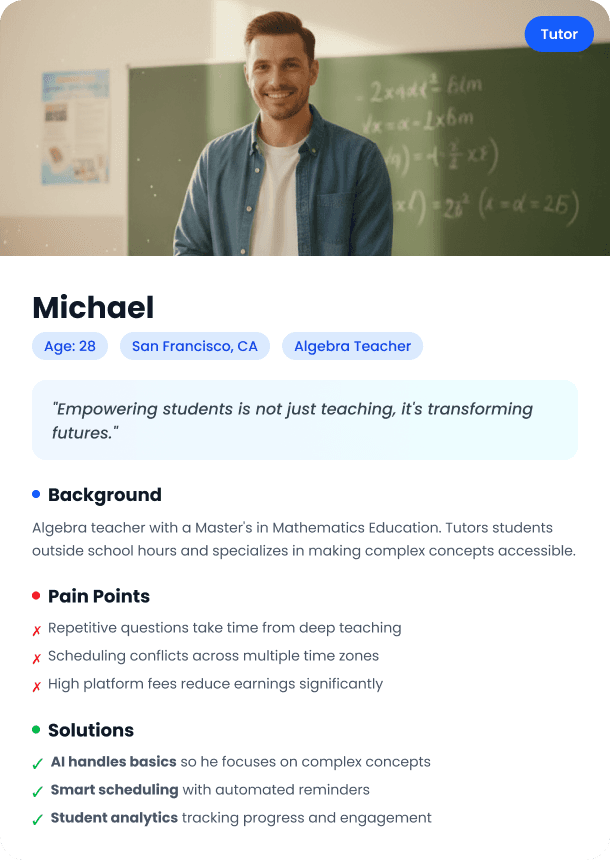
Second is the tutor. They’re not just teaching, but also managing scheduling, sessions, and income. So their experience needs to be efficient, responsive, and easy to manage.
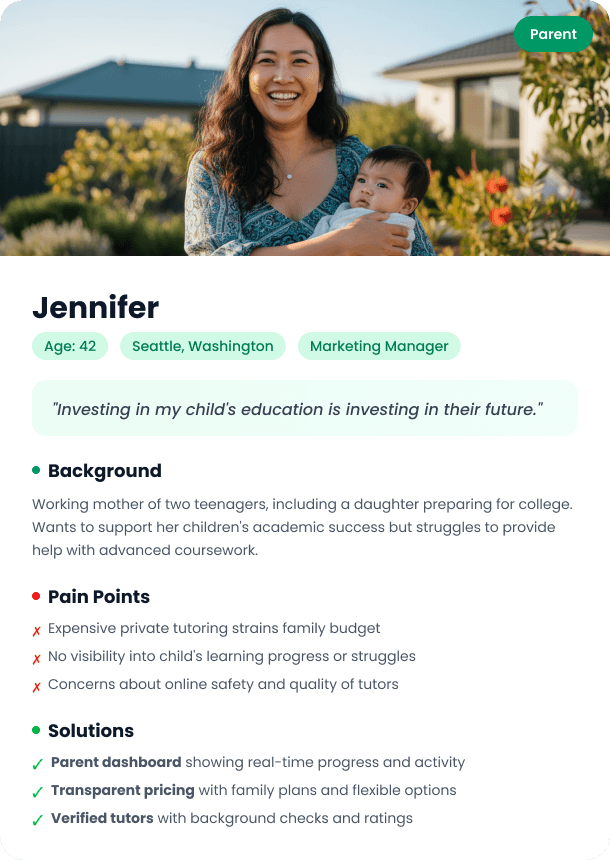
And third is the parent, who’s looking for visibility and trust. They want to understand their child’s progress and feel confident in the support they’re receiving.
User Flow
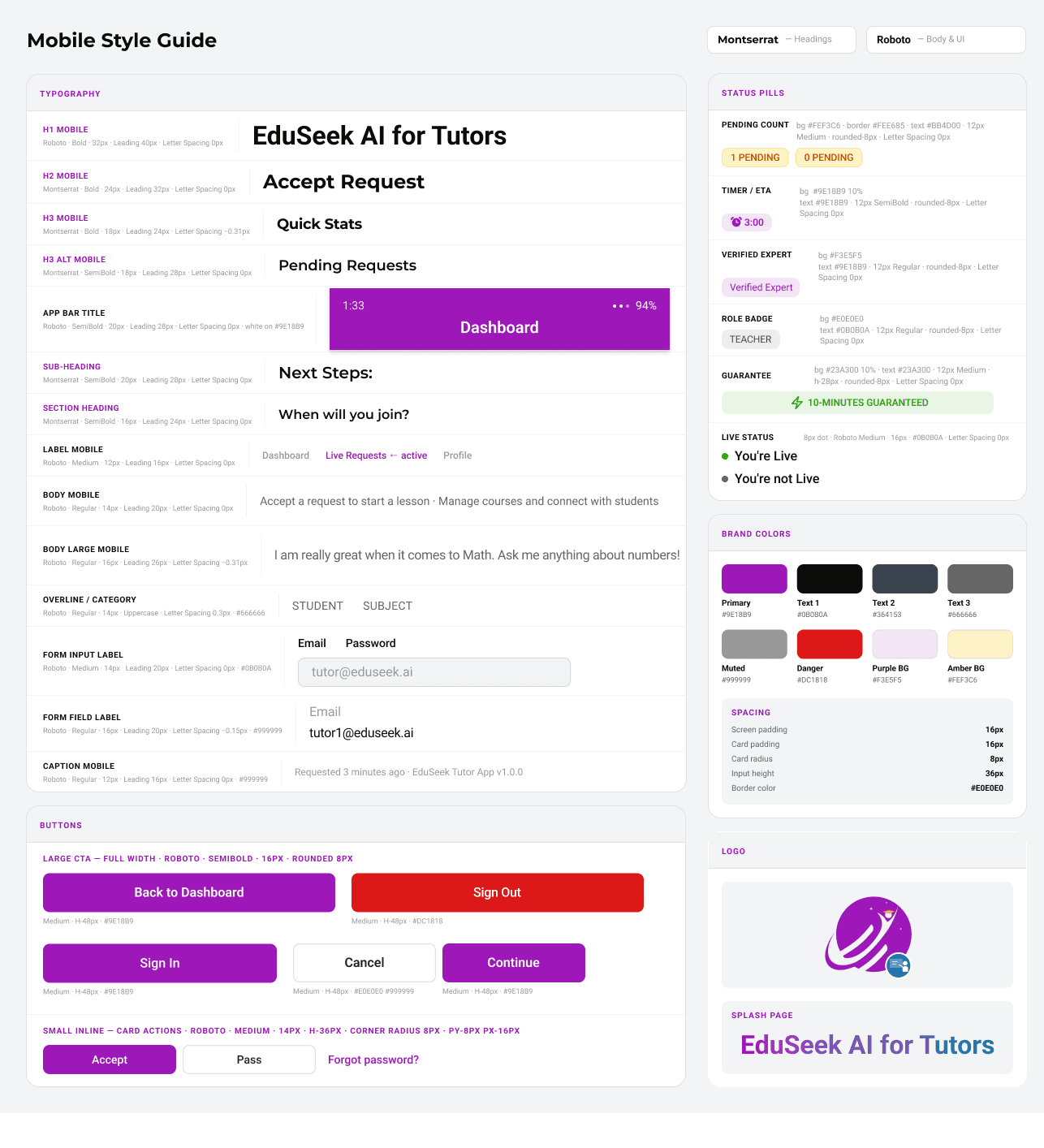
Design System and Branding
Solutions
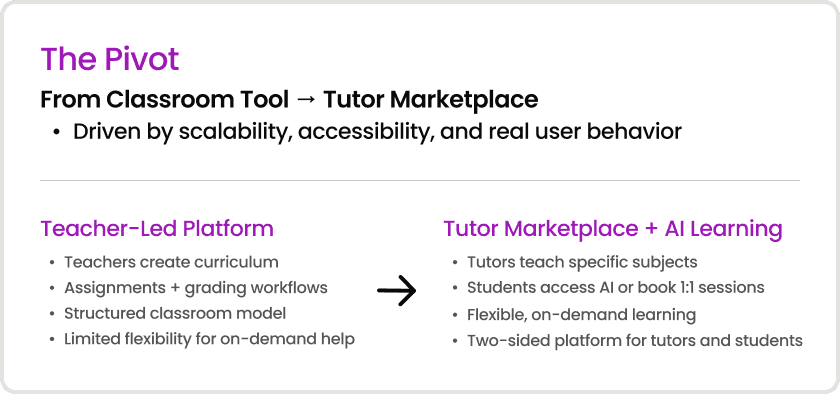
1. Shifted from static curriculum → on-demand learning
Designed for flexibility instead of rigid classroom structures
2. Introduced a two-sided tutor marketplace
Enabled direct connections between students and subject-specific tutors
3. Redesigned experiences around real user roles
Built tailored workflows for tutors, students, and parents
4. Connected AI guidance with human support
Created a system where AI assists learning, not replaces it
Solutions
1. Shifted from static curriculum → on-demand learning
Designed for flexibility instead of rigid classroom structures
2. Introduced a two-sided tutor marketplace
Enabled direct connections between students and subject-specific tutors
3. Redesigned experiences around real user roles
Built tailored workflows for tutors, students, and parents
4. Connected AI guidance with human support
Created a system where AI assists learning, not replaces it
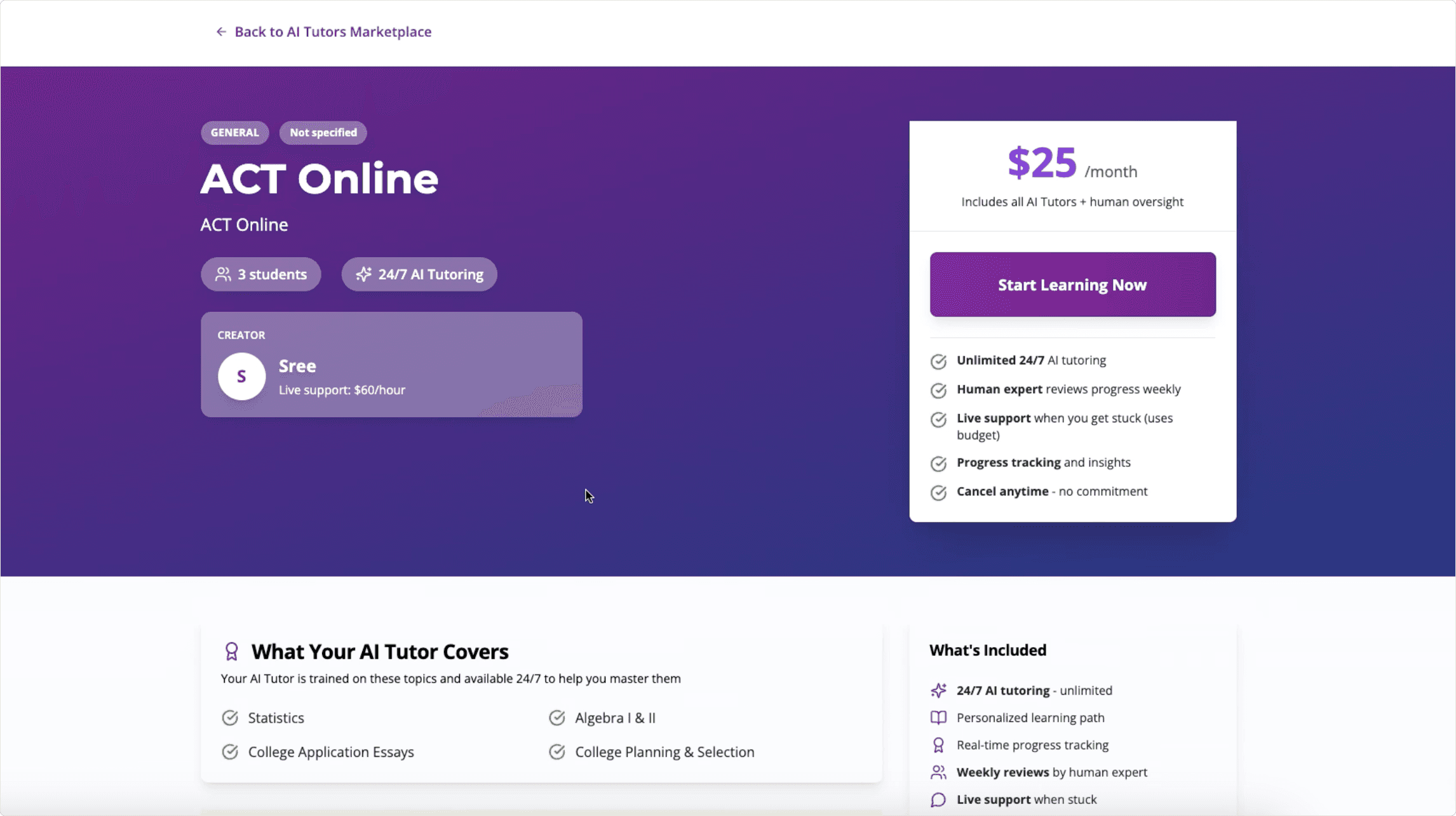
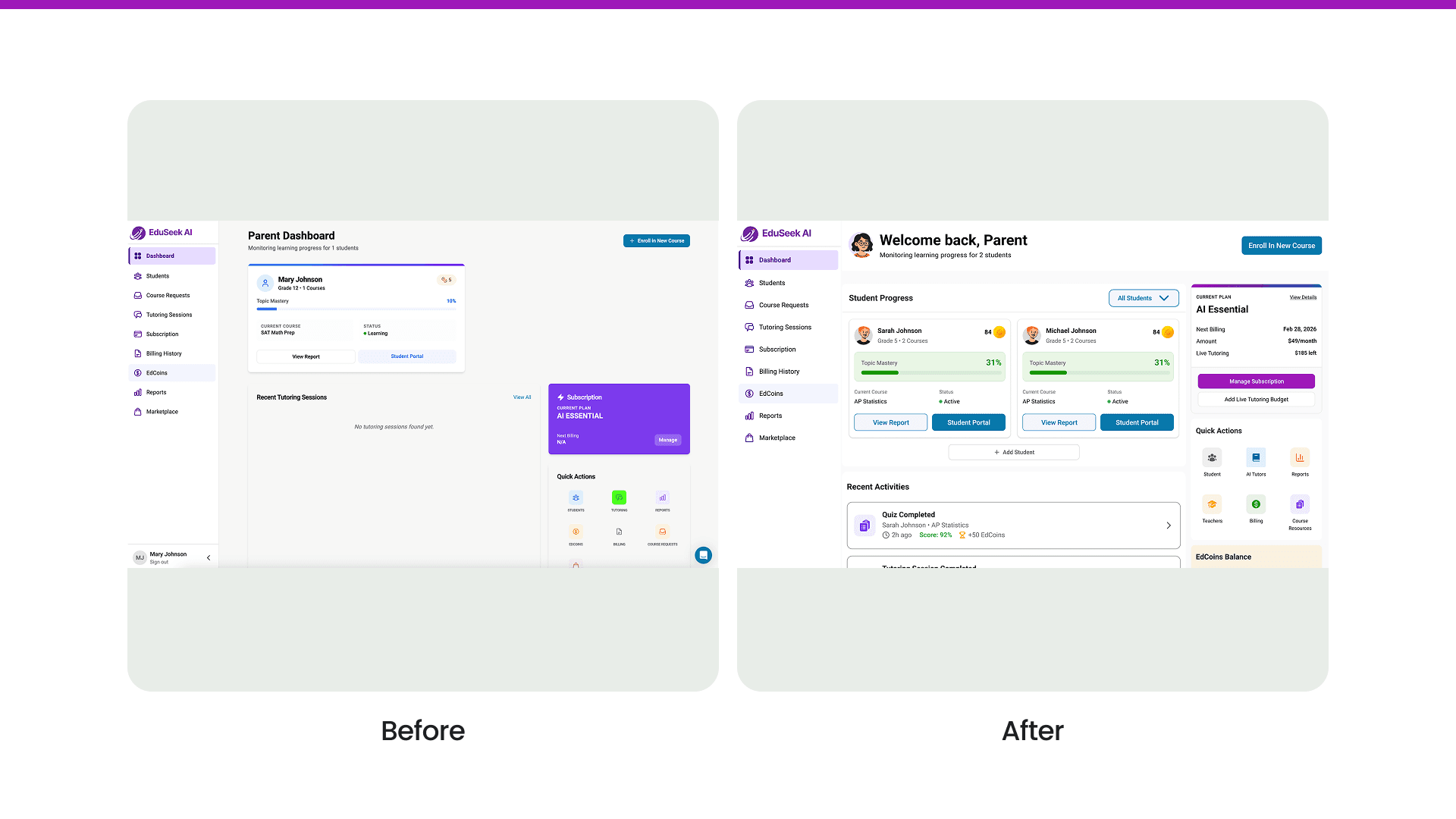
Market Tutor Profile Redesign
Improving visual hierarchy, credibility, and usability
Before
After
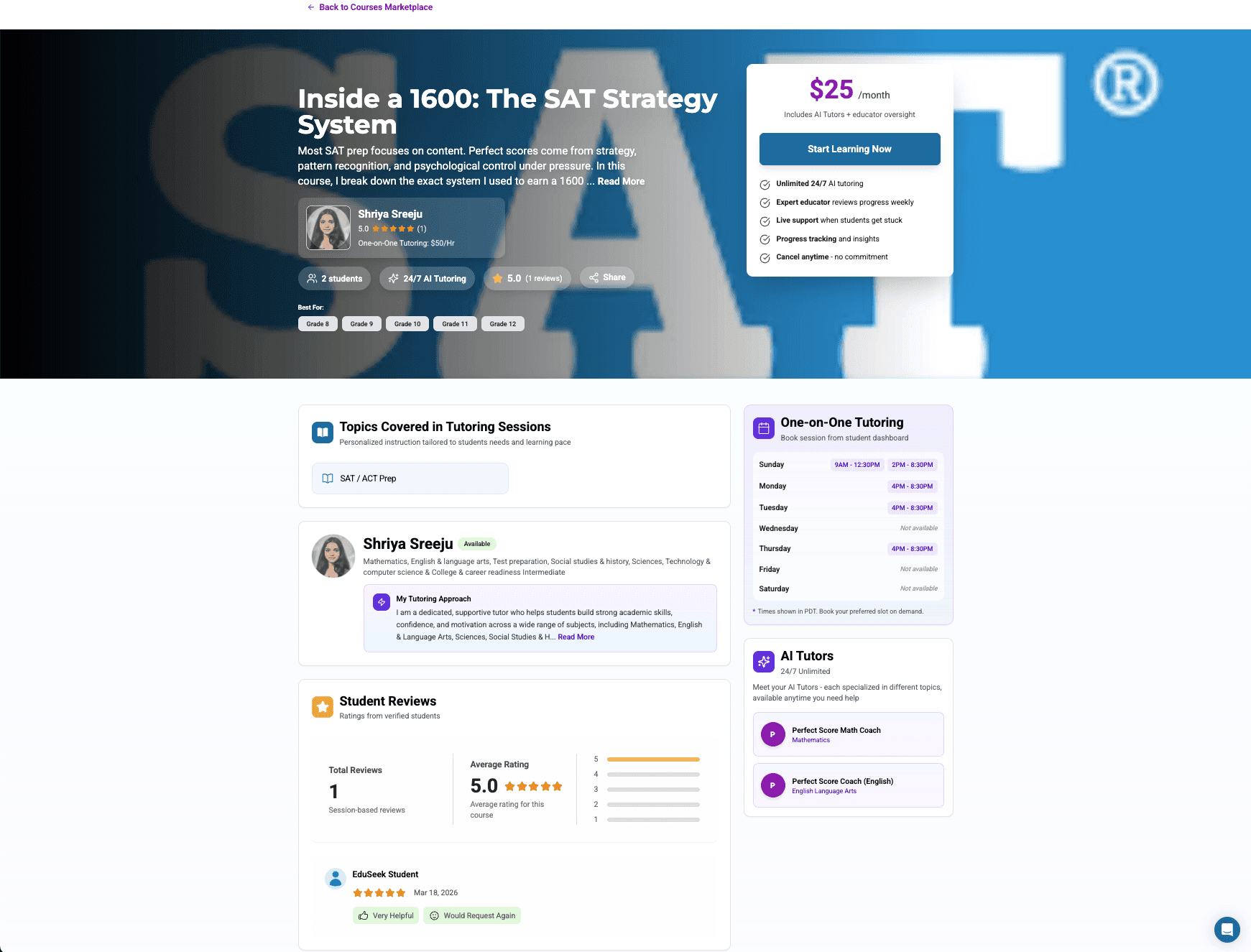
1. Enhanced Header
Added tutor photo, course description, and grade levels for better visual hierarchy
2. Credibility Features
Added tutoring approach section and student reviews for increased trust
3. Improved Scheduling
Simplified time slot display for easier session booking
Key User Experiences
Student Experience
Focused on creating a flexible and engaging learning experience for students
Enabled easy access to enrolled courses, discovery through the marketplace, and personalized recommendations
Introduced session recordings so students can revisit material at their own pace and support different learning styles
Integrated an EdCoin system to reward engagement and encourage continued learning
Parent Experience
AI Tutor Chat
Helped shape an AI tutor that guides students step-by-step instead of just giving answers, making the experience feel more supportive.
Designed a support system where students can move from AI guidance to a live tutor through an SOS feature when they need extra help
Pushed for more contextual support by suggesting an attachment feature, so students can upload their work and get feedback based on what they’re actually stuck on
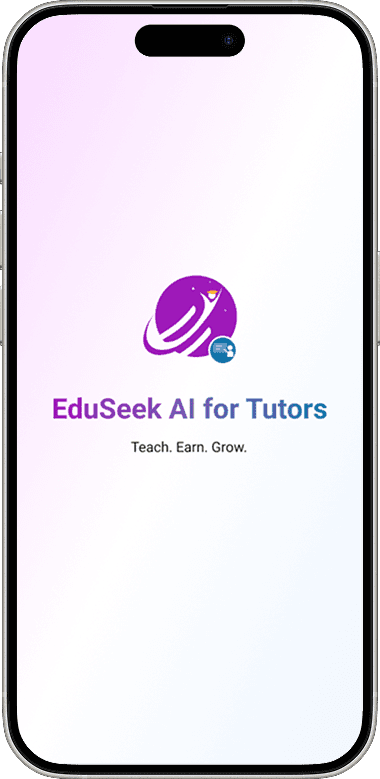
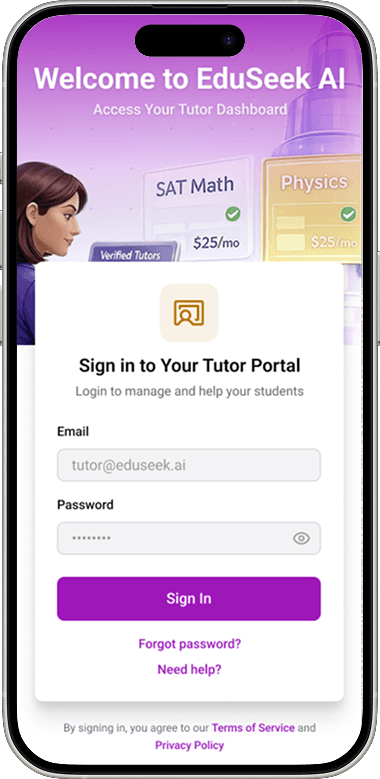
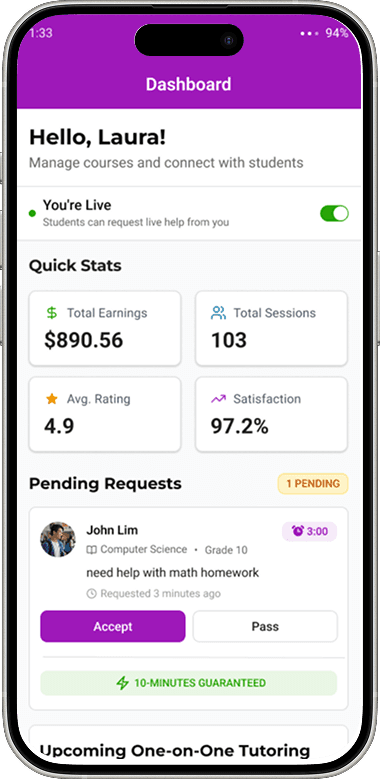
Mobile Accessibility
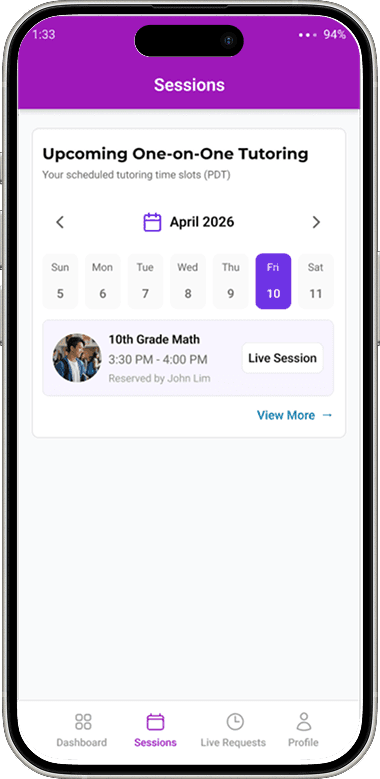
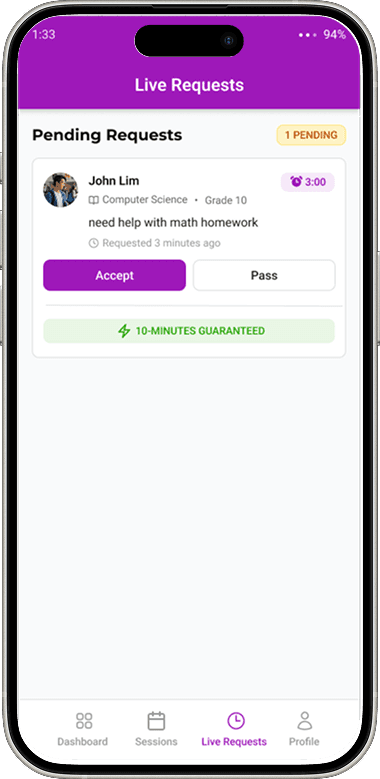
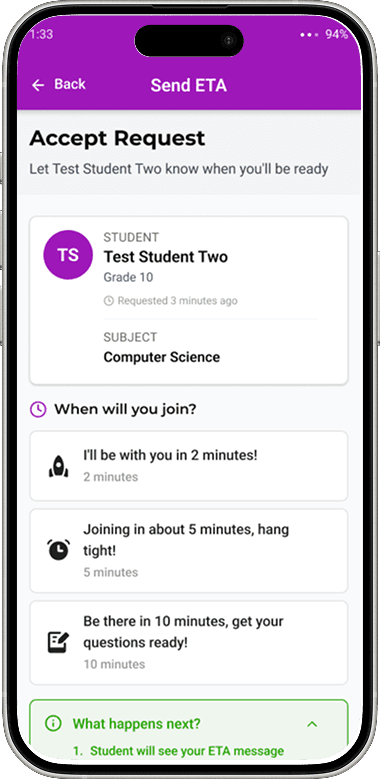
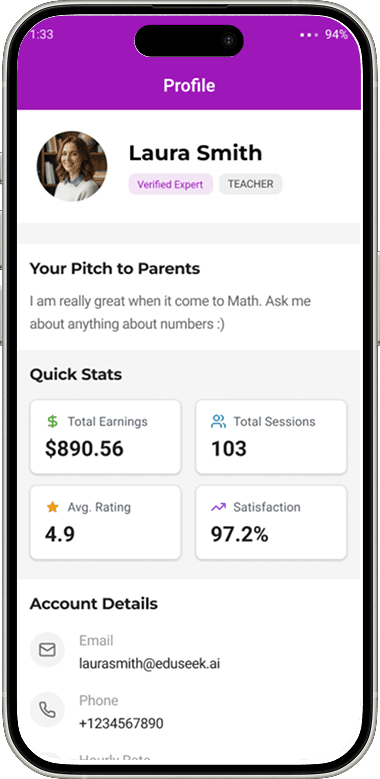
Designed a mobile experience that enables tutors to stay connected and responsive on-the-go to provide quick access to account management, performance insights, and real-time session readiness.
Website
Key Takeaways & Next Steps
1
User-Centered Design
Design decisions were guided by usability testing and real user needs, ensuring workflows supported both sides of the platform, from students seeking help to tutors managing sessions and earnings.
Key insight
2
Cross-Functional Collaboration
Collaborated within a team of product designers, founders, and engineers to align on product direction, iterate quickly, and support a successful shift toward a tutor marketplace model.
Key insight
3
Systems Thinking Across B2B + B2C
Designed for a multi-sided platform by balancing the needs of tutors (B2B) with students and parents (B2C), creating a more cohesive and scalable learning experience.
Key insight
4
Scalable & Iterative Design
Focused on building consistent UI patterns and adaptable experiences that support ongoing product growth across dashboards, mobile apps, and AI-driven features.
Key insight
User Interviews
As a travel enthusiast, I often find myself planning last-minute group trips with friends. While we always managed to pull the itinerary together by adding activities on the go, the process was hectic and unorganized.
However, I’ve also noticed that although we sacrifice time and energy to plan, we often end up with disorganized itineraries, overlooked details, and choices that don’t always align with everyone’s preferences or budget.
User Quotes
Main User Personas
In the early stages, I interviewed several types of travelers: spontaneous explorers, deal-hunters, and experience seekers. I realized their struggles weren’t based on age or location alone. It was all about their travel style.
People like Ryan travel based on how they’re feeling, and they don’t want strict plans.
Others like Fiona thrive on details. She wants structure, tracking tools, and clarity.
Some users are somewhere in the middle who plan loosely but still want to feel in control.
HOW MIGHT WE…
Simplify the travel planning process to reduce decision fatigue while offering personalized, budget-friendly options that adapt to different travel styles, from spontaneous explorers to meticulous planners?
Early Ideation
My first idea was a mood-based trip planner. The app would ask you how you're feeling and suggest a trip that matches that mood. It sounded playful and different, and users were intrigued at first.
But in testing, frequent comments included:
‘I don’t really know what “cozy” means in terms of activities.”
“I want to feel adventurous, but what if I just want a good meal?”
So the idea had charm, but it lacked clarity. Users couldn’t see how their mood would realistically guide a full trip plan. Ultimately, that disconnect led to my biggest pivot!
Sketch
User Flow
This user flow shows how the app guides travelers from the first tap to a fully personalized trip:
It starts with a simple entry point, the App Cover Page, where users can log in or sign up.
From there, they land on a Welcome Page and take a Travel Style Quiz that helps the app understand their preferences, like how they like to travel and what kind of budget they’re working with.
After getting their results, they’re brought to the Quiz Triage Page, which acts as a jumping-off point to explore different parts of the app.
From this hub, users can head to the Home Page where they can view their itinerary, chat with the Nomie assistant for help, or update their profile. They can make changes, add details, and then view tailored suggestions for places to stay, eat, and explore based on their quiz results and budget.
Wireframes
Red Route One - Create An Account
Red Route Two - Onboarding: Mood Quiz
Red Route Three - Plan a Trip
Design System
Design System
User Pain Points
Shift from Mood-Based to Travel Style Planning
Original Concept
The initial idea for the app was centered around mood-based travel planning. Users would select a mood, such as adventurous, relaxed, or cultural, and receive a pre-generated itinerary tailored to that emotional state. The experience felt engaging and playful, and early sketches showcased a visually rich quiz flow leading to suggested activities, destinations, and themes. The aim was to reduce decision fatigue by offering emotionally driven recommendations with minimal user input.
Why It Changed
As secondary research deepened, a clear disconnect emerged between the emotional lens of mood and the practical needs of real travelers. 85% of users fell into budget-friendly or mid-range travel categories, with a clear focus on spending between $50–$200 per day. This revealed a key insight: users don’t typically plan trips around how they feel. Instead, they plan around how they spend.
Red Route Three - Plan a Trip
Solutions
1. Shifted from static curriculum → on-demand learning
Designed for flexibility instead of rigid classroom structures
2. Introduced a two-sided tutor marketplace
Enabled direct connections between students and subject-specific tutors
3. Redesigned experiences around real user roles
Built tailored workflows for tutors, students, and parents
4. Connected AI guidance with human support
Created a system where AI assists learning, not replaces it
Design System and Branding
Before
Before
After
1. Enhanced Header
Added tutor photo, course description, and grade levels for better visual hierarchy
2. Credibility Features
Added tutoring approach section and student reviews for increased trust
3. Improved Scheduling
Simplified time slot display for easier session booking
1. Enhanced Header
Added tutor photo, course description, and grade levels for better visual hierarchy
2. Credibility Features
Added tutoring approach section and student reviews for increased trust
3. Improved Scheduling
Simplified time slot display for easier session booking
How I Addressed User Pain Points
Drag-and-Drop Customization
Recognizing the diverse planning habits of different travelers, I introduced flexible itinerary-building tools.
Users can now drag, drop, and swap activities to suit their pace and preferences, catering especially to planners without overwhelming users.
Integrated Customization and Budgeting Tools
Added filters for preferred activities, dietary needs, and destination types, allowing users to select specific travel goals and group preferences.
To support the 80% of travelers who actively manage travel expenses, the app now features real-time price tracking, estimated daily spending, and toggles to adjust for splurge vs. save options. This aligned directly with user behavior, making planning not just fun, but financially grounded.
Solution
This is where the visual identity really came together. I used calming colors, lots of white space, and simple icons to reduce cognitive load. I introduced ‘Nomie,’ a friendly character that helps guide users.
Design System
This is where the visual identity really came together. I used calming colors, lots of white space, and simple icons to reduce cognitive load. I introduced ‘Nomie,’ a friendly character that helps guide users.
Wrap-up
This project was a defining moment for me as a designer. Partnering with three designers and a stakeholder at Huey Suncare, I balanced brand vision, speed, and user needs in a fast-paced environment. Through targeted research and A/B testing, I validated that color and visual identity were critical to communicating energy and trust.
If given more time, I would expand testing to strengthen pattern recognition and increase confidence in design decisions. Ultimately, this project reinforced my belief that thoughtful, research-backed design transforms products into meaningful brand experiences.
Test It Out!
Wrap-Up
More insights to explore
Discover additional case studies, tips, and strategies to help your business grow and innovate faster.
2025
Huey Suncare: Redesigning the Suncare E-commerce Experience
A modernized e-commerce platform that integrates interactive quizzes and an AI-powered dermatology chat to improve accessibility for diverse skin needs.
2026
EduSeek AI: Bridging AI Guidance with Human Support in Learning
Design AI-powered learning experiences by simplifying workflows, improving cross-platform consistency, and creating scalable UI for students, parents, and tutors.
Get In Touch
I would love to hear from you! Reach out with any questions or feedback
Ireland M.
Let's Talk
Interested in discussing design, sharing ideas, or exploring innovations in product design? Feel free to reach out - let’s keep the conversation going.
Let's have a coffee chat!
Get In Touch
I would love to hear from you! Reach out with any questions or feedback
Ireland M.
Let's Talk
Interested in discussing design, sharing ideas, or exploring innovations in product design? Feel free to reach out - let’s keep the conversation going.
Let's have a coffee chat!